
Alexander MacRobert was born in Aberdeen in 1854.
Papermaking took place in many parts of the country where there was a plentiful supply of water, but also of waste cotton. One such was Aberdeen. There were also many textile mills there: the Crombie Mills which exported fine tweeds and overcoats and Hadden & Co who were early users of steam driven engines for the wool trade, to name but two. Textiles would be the future for Mac.
Marion Miller in her book, Cawnpore to Cromar: The MacRoberts of Douneside, describes Alexander’s childhood. He was a bright boy and became a bright young man, eager to learn all he could. He began work in the local paper mill at the age of twelve. Miller tells that ‘the manufacturing capabilities of Stoneywood Paper Mills were recognised world-wide’. The mill grasped new technology as it appeared over the next half century, and, between the years 1850 to 1890, its workforce increased from 200 to 1,500. Whilst Mac worked there, he studied at evening classes at the Mechanics Institute, eventually teaching at the newly renamed Robert Gordon’s College.
On 31 December 1883 Mac married Georgina Porter, a local girl, and headed out to India to a job as a chemist at the Muir Mill in Cawnpore. Georgina was left behind until Mac had established himself. Cawnpore was known as the Manchester of India and, although still bearing the scars of the Indian mutiny some twenty years earlier, it was definitely the right place for an ambitious young man. Mac’s renowned determination was put into play the moment he landed, since the chemist’s job had already been filled! He was sent instead to the Cawnpore Woollen Mills and quickly made his mark.
Mac was offered the job of trying to turn it round. He used his experience to study the business and get to know how the Cawnpore business community worked, and, in particular, how relations between British and Indians had healed in the years since the massacre. Mac turned his hand to the many practical tasks required of workers at the mill and applied his understanding of the manufacturing process. He then turned his attention to the market and created a brand, ‘Lalimli’, another name for the Tamarind tree. He placed emphasis on quality, ‘everything is from pure, sound wool. Only the very best dyes are used and all colours and shades are as fast and permanent as they can be made’.
An early order was for the 23,000 strong Indian Army deployed against Afghanistan. The military business was core, but Mac branched out with success into the domestic and leisure markets. The business prospered and grew and Mac and his wife contributed greatly to the community and business in India.
Georgina missed Scotland and soon the couple bought the small estate of Douneside within a mile of the village of Tarland near Aberdeen. This began Mac’s journey to becoming a stalwart of the Scottish establishment. Happiness, though, was destined not to last since, following a long battle with cancer, Georgina died on 30 November 1905. Mac put his efforts into building his businesses into the substantial British India Corporation.
His experience is illustrative of the growing strength of India, but also a precursor to the role India would play in supplying allied armies in the two world wars. I think it is one of many illustrations of how Britain did create the manufacturing world. India had been producing wonderful fabrics long before Lancashire did, but the British Richard Arkwright invented the manufactory and Mac brought these ideas with him to India.
Rachel Workman was many years Mac’s junior and was a significant woman in her own right. With both of her parents also being noted Himalayan explorers, she was probably always destined to be adventurous. Although American by birth, she studied Geology at Edinburgh University and Imperial College London. Later she went on to publish several geological works. In 1911 she married Mac and they had three sons. Rachel became a fellow of the Geological Societies of London and Stockholm. If this was not enough, she took to the farming activities of the MacRobert’s family and became President of the British Friesian Cattle Society and Royal Northern Agricultural Society.
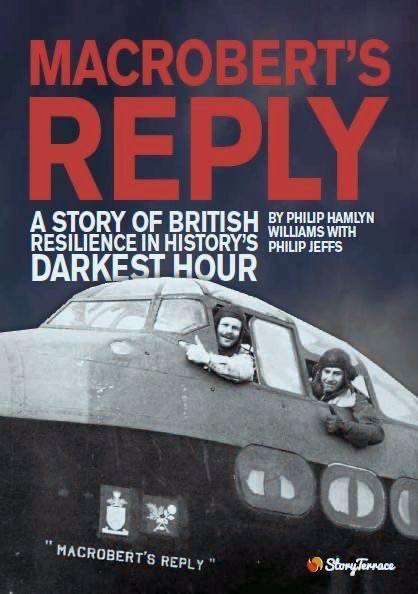
Mac died on 22 June 1922 and the eldest son, Alasdair, succeeded to the title. I tell in my book MacRobert’s Reply the story of Rachel and how eventually she lost all three of her sons. She became a benefactor and this included endowing the annual MacRobert prize for excellence in engineering. In How Britain Shaped the Manufacturing World I tell how both Ruston Gas Turbines and Raspberry Pie were awarded the prize.
For Stoneywood Mill, in 1913 the first envelope making machines were installed and it became celebrated for producing thirteen million envelopes a week. It is still making paper as part of Creative Paper Holdings which bought it from papermaking multinational, ArjoWigginsTeape, in September 2019.
Further reading:
Marion Miller, Cawnpore to Cromar: The MacRoberts of Douneside,
Philip Hamlyn Williams, MacRoberts Reply

