As a schoolboy in the fifties, my birthday treat was a trip to Heathrow Airport to stand on the roof of the Queen’s Building to watch the aircraft. My favourites were the Vickers Viscount, in which I was fortunate enough to fly on a number of occasions, and the de Havilland Comet. My aircraft manufacturing hero though is Sir Arnold Hall, chairman and managing director of Hawker Siddeley from 1967 to 1977. There are many possible reasons, but top of the list must be Hawker’s decision to remain with the Airbus project when the government decided to end its involvement.
The name, Hawker Siddeley, still sends shivers down my spine and I shared Hall’s sadness when it was absorbed into British Aerospace. The name Hawker conjures up Sopwith and later the Hurricane. It was, though, the Comet that made Hall’s name. Let me explain.
Arnold Hall was born in Liverpool to a talented piano teacher; his father was an upholsterer. Other members of the family had been seafarers. His boyhood passion was making steam engines. He won a scholarship to Alsop High School at Walton from which he went on to a brilliant career at Claire College, Cambridge where he won many prizes. During his doctorate, he worked with Frank Whittle on the mathematics of the jet engine compressor.
The Second World War found him at the Royal Aircraft Establishment where he led the teams that produced both the advanced bomb-sight and the gyro gun-sight. He was appointed director of the Farnborough establishment in 1951.
In 1952, the Comet took to the skies to much acclaim,.but after only two years three aircraft failed in operation. Investigations were undertaken, but no cause found. The government called upon Farnborough to undertake a full independent investigation which Hall led. He concluded that mathematical investigation was not leading to answers. In his obituary in the Guardian, the writer says this:
Hall promptly built Farnborough’s famous “whole pressurised aircraft” test rig, in which the stresses of flight cycles could be simulated rapidly many thousands of times on a complete aircraft. The outcome, clinched by early and massive failure of the test aircraft’s pressurised cabin, explained the catastrophes, provided new knowledge of aluminium alloys under repeated stress, gave new meaning to the concept of “fatigue life”, and revealed the unexpected inadequacy of conventional and hitherto highly trusted methods of stress testing and analysis.
With this discovery, the Comet 4 was produced but by then it had been overtaken by other aircraft. Hall was knighted at the age of 39.
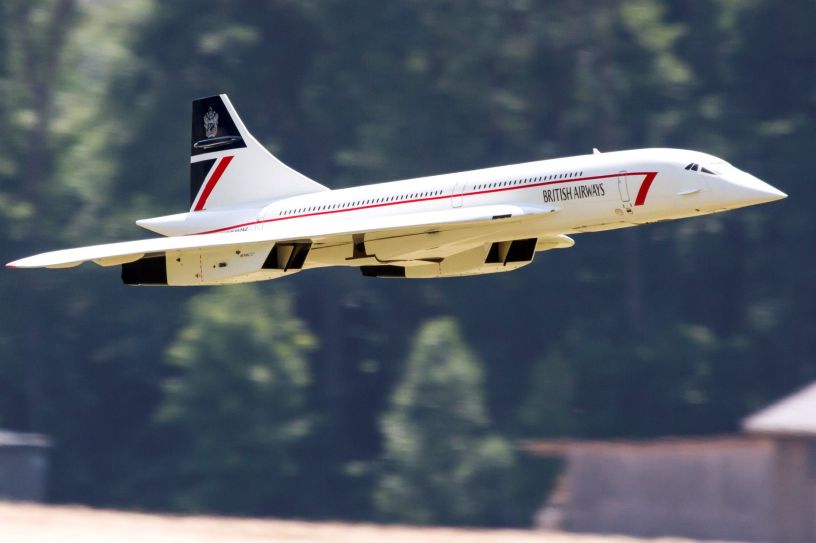
Hall joined Hawker Siddeley first as Technical Director. He led Bristol Aero-engines and then joined the main company where amongst much else he chaired the Anglo-French Concorde design team. In Vehicles to Vaccines I write of the nationalisation of the aircraft industry and the subsequent diversification of Hawkers which Hall led.
He retired in 1986, but continued his involvement with the scientific life of the nation,
Further reading:
https://www.theguardian.com/news/2000/jan/11/guardianobituaries2