
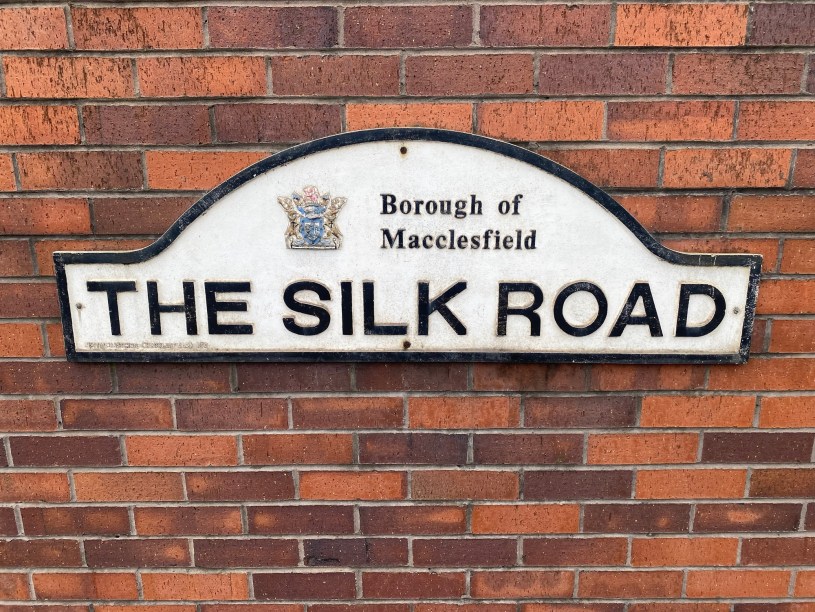
Silk enters the story of British manufacturing in a number of places, not least Macclesfield which has its own silk road.
This post is about that rather longer silk road that runs from China to the Atlantic. I have used a possibly world changing book as my source which views the growth of trade and civilisations in a non-Eurocentric way. I found the result truly eye-opening and I offer my precis written as much for me, for the book is long and rich with detail. (The Silk Road – A New History of the World, Peter Frankopan). The term, Silk Road, is used I think as a metaphor for trade routes, the arteries through which the ‘blood’ feeding civilisations would flow. That ‘blood’ was silk, other luxuries, then gold and silver, wheat and, throughout time, people sold into slavery and death, and finally oil. Then there were manufactured goods: pottery, textiles, armaments and building materials, but most was about bringing luxury to the elite.
The Fertile Crescent fed by the Tigress and Euphrates was wonderfully wealthy. It was on the back of this that the Persian Empire arose. Its genius was its acceptance of different cultures, from many of which it borrowed. Alexander then enriched the people of Persia by expansion of the Greek world to Alexandria and beyond
Further east, China, under the Han dynasty, grew in strength and wealth. It had something small and precious: silk. Its size allowed it to be carried across rough terrain. Its desirability led to it becoming a store of value, a means of exchange far more acceptable than coinage.
Empires come and go. Rome came and went; it enjoyed the wealth of fertile Egypt, but then lost it. It left a wonderful legacy not least in building. Rome did of course divide between west and east. It was the east which became both more powerful and prosperous.
Persia proved amazingly resilient despite attacks successful or otherwise from the nomads on the Steppes and elsewhere.
For much of the time polytheism thrived. Buddhists found common ground with Christianity which spread more in the east than in the west. Judaism had a strong hold in Palestine and in those places to which Jews had fled.
The sixth century saw populations decimated by Bubonic plague. The seventh century witnessed the emergence of a new prophet proclaiming one God, drawing on both Jewish and Christian tradition with which it parted company on one crucial point: the use of violence. The world was to be divided into believers and non-believers, the latter facing horrific consequences. This is of course far too simplistic: there are peace-loving Muslims and both Christians and Jews who are not averse to a bit of violence.
This was a world where the Arab would reign. The spread from the little city of Mecca was a masterclass in invasion. Let’s begin with the Arab armies. Their leaders knew that to keep them on board, plunder needed to be shared. And it wasn’t only plunder; cities would be attacked and pay large sums to be left in peace albeit as part of the Muslim world. That world stretched west through Egypt and North Africa into Spain, and east to what is now western China.
Cordoba in Spain became a major centre for Islam….
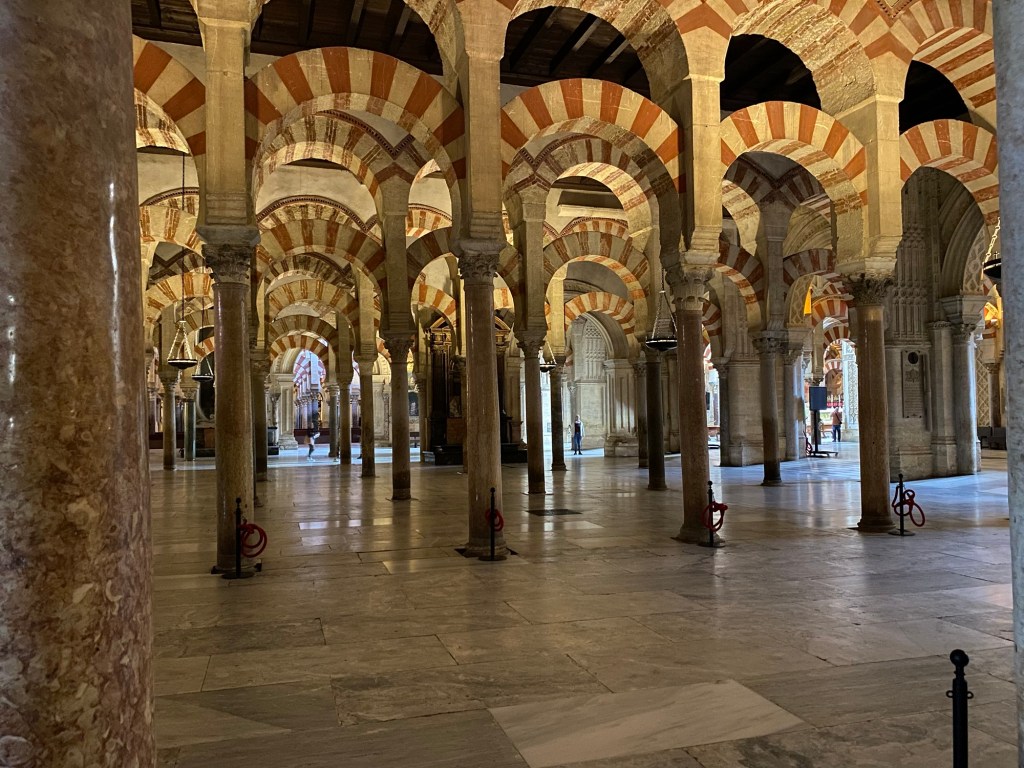
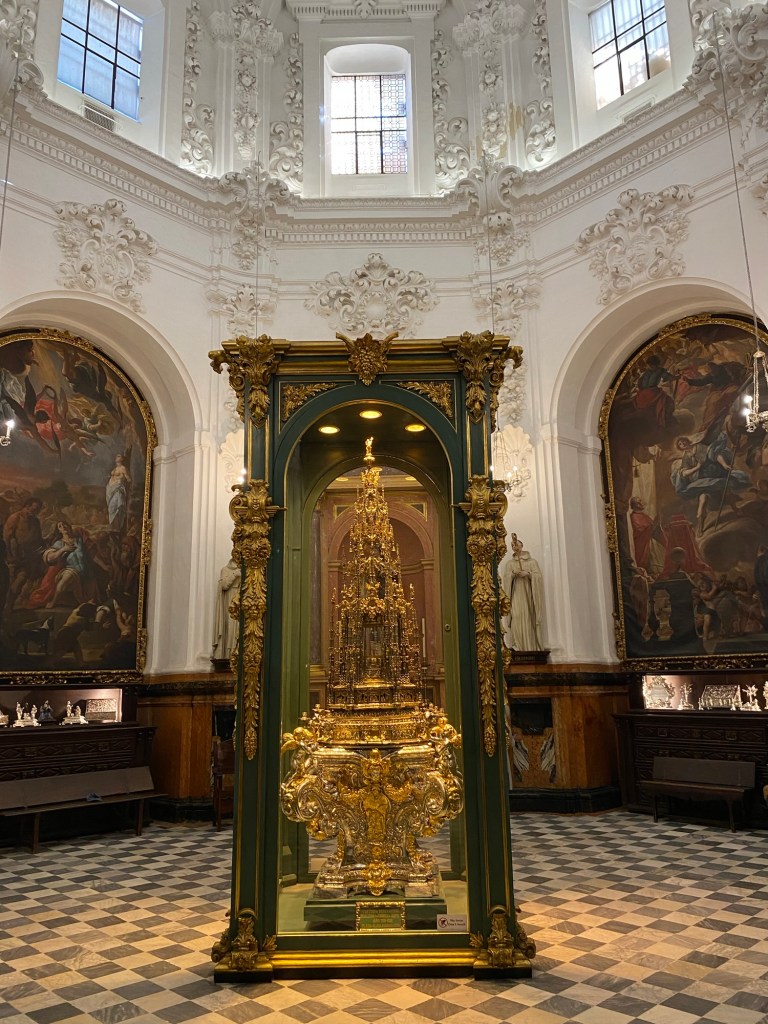
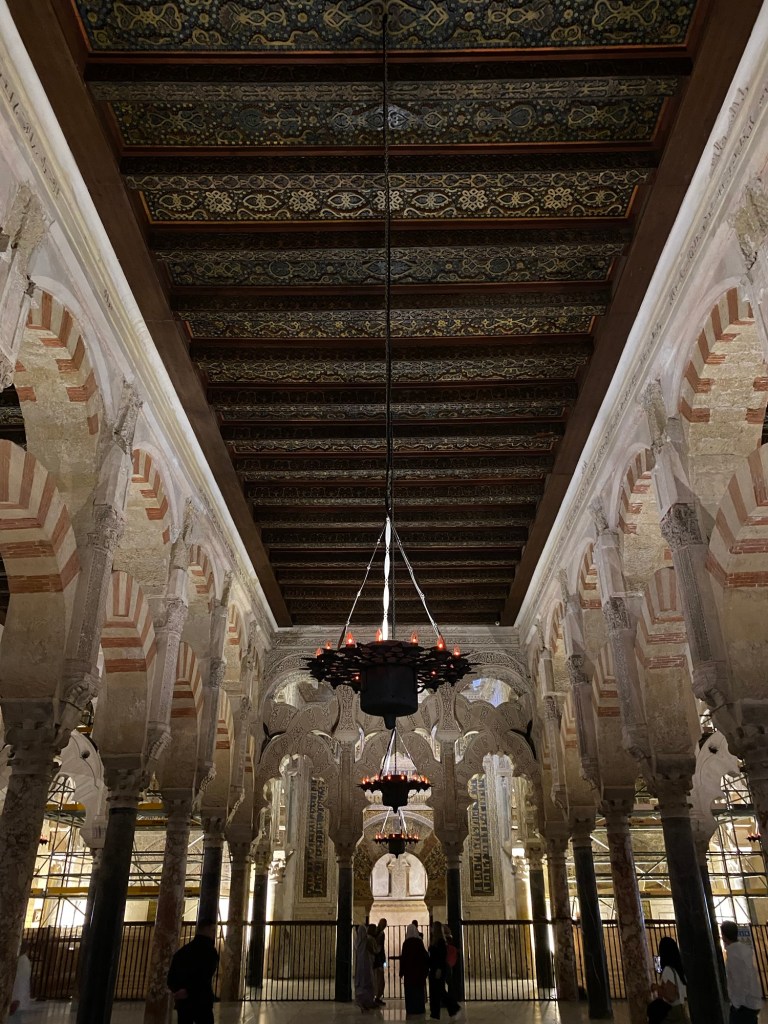
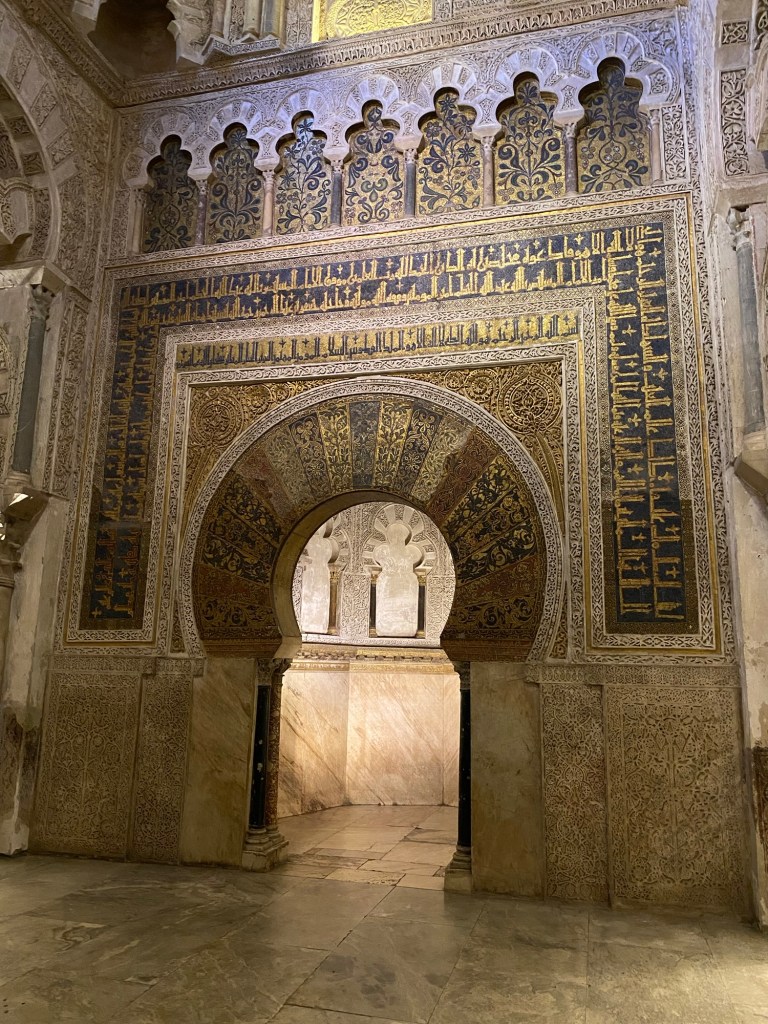
A vast empire facilitated trade on a whole new scale. Baghdad was estimated to have a population of one million. All manner of delights could be bought in markets across the empire. The leaders had unbelievable riches in gold, silver and precious stones.
Prosperity enabled scholarship and great art. It was an empire of enquiry where minds were open to new ideas. This was perhaps in contrast to Christianity whose authorities imposed rigidity in belief.
Industry flourished; kilns were reputedly able to fire thousands of pieces of ceramics. Potters in Basra imitated Chinese porcelain.
It seems like all empires rivalry grew between Muslim sects each one arguing their superior line to the prophet.
The presence of so much wealth attracted those from outside not least on, or north of the Steppes. These nomads were farmers with fields and orchards but more importantly horses and sheep. Add to this precious furs and the trade routes were busy.
Wealth attracted those from yet further afield, Vikings who made their violent way through Russia, integrating with the local population becoming Viking/Rus. They needed currency and found this in the shape of beautiful young Slavs whom they enslaved and sold in the markets of the Arab empire taking home precious silk and swords. The city of Kiev became a major trading centre.
Slavery was widespread stretching north to the British isles and south into sub-Saharan Africa.
In time taxation, or protection money, started to take the place of slaves, and trade transacted with coin thrived with textiles from Antioch, alongside silks and porcelain from China.
This busy trading world was disrupted periodically by political upheavals. The power of Baghdad waned and that of the Byzantine empire rose. The peoples of the book, Muslims, Jews and Christians, lived in competitive harmony.
Enter the resurgent west with the Crusades. From the point of view of trade, the taking of Jerusalem opened the eastern world to western markets. The crusaders needed provisions and the Italian states, most notably Venice, were only too keen to oblige. This led to so much more. Cloth of Antioch was to be found at the court of English kings.
Politically, the Christian west entered Constantinople to the delight of the Pope in Rome. Western countries, Italy in particular, began to enjoy the silk and other delights of the east. Yet, nothing lasts.
A nomadic people bordering China known as the Moguls had a leader who would come to be known as Genghis Khan. His methods were by now familiar. He began with alliances with other nomadic tribes, but then headed east wreaking unspeakable violence upon the first cities he encountered. From then on his reputation went before him and cities surrendered to escape annihilation, a fate that awaited those who resisted. Interestingly an early conquest was Uyghar in western China. This added scholarship. His conquests continued until he and his heirs controlled land from the Pacific to the Atlantic. Europe was hardly affected, for the juiciest plunder was in the Islamic world. The only impact was the loss of Jerusalem after two centuries. From the point of view of European trade, the Italian city states simply pushed their trading further east.
The Mogul empire created stability in which trade could thrive. The Venetians and Genoese set up staging posts on the Black Sea which in effect took over as the Silk Road. They did substantial trade in foodstuffs from Egypt, for example. Marco Polo made his journeys of exploration. Again, nothing lasts
The Black Death spread like wildfire in the mid fourteenth century, decimating populations. Put crudely, there was now the same resource but many fewer people resulting in increased per capita spending power. Economies recovered and trade boomed. Alexandra resumed its role as a trading hub. Europe gained confidence. Some textile manufacturing set up in Europe, mainly Italy.
Mogul China became Ming China and so the start of that famous dynasty. Venice ensured that it held pride of place. Spices and pigments were imported, the latter ready for the great artists of the Renaissance.
China spent heavily on beautifying Beijing. In neighbouring northern India and Pakistan, the Mughal empire with its leader Tamburlaine used skills expelled from Baghdad on similar vanity projects. Such spending proved unsustainable.
The fifteenth century witnessed a financial crash with a consequent knock-on to trade. The issue was a shortage of silver coinage. In essence China was producing more silk and porcelain than could be paid for by imports. The gap, the balance of payments, had to be filled by silver and there simply wasn’t enough.
The Muslim Ottoman Empire took Constantinople the last bastion of Christianity in the Middle East.
Gold had been arriving in Europe and the Middle East from the West Coast of Africa, the Gold Coast, for centuries. It was brought across the Sahara with stopping points including the city of Timbuktu which had became massively rich from gold trading. Gold was accompanied by slaves as seemed commonplace in the world of the first millennium.
Portugal was becoming wealthy, adventurous and ruthless as it sent ships to explore the west African coast. In many places pillage was meagre except for slaves who would be removed to Portugal in their thousands. It was a Spaniard, Christopher Columbus, who led much of the exploration.
Columbus’s ambition was the meet the Great Khan. In his voyages south he had calculated the curvature of the earth and considered that by sailing west he would arrive in the Indies. He gathered the support of Ferdinand and Isabella of Spain and set off on terrifying voyages of exploration. He would have fitted well in the 21st century world of spin, for he reported to the King discoveries of untold wealth which did exist, but not where Columbus landed. It was left to men like Cortes to raid the Americas of gold and silver, murdering the indigenous population with guns, swords and disease. The destruction was massive as were the rewards. King Charles V of Spain became the most powerful and wealthiest man in Europe. Silver coinage was minted in vast quantities.
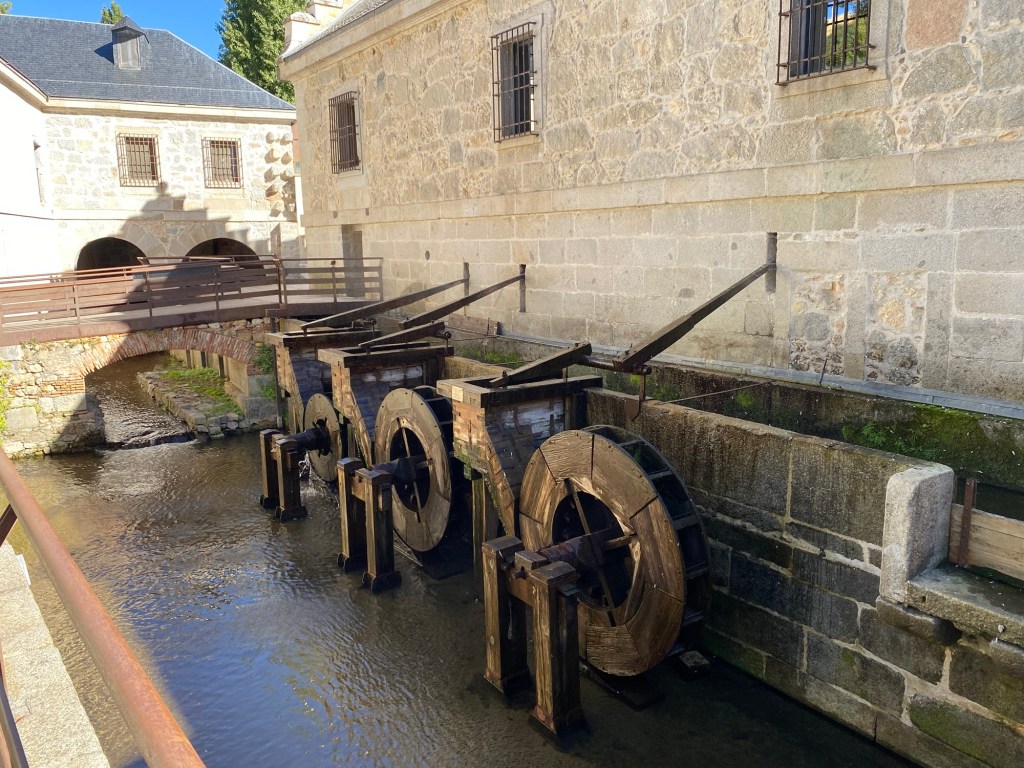
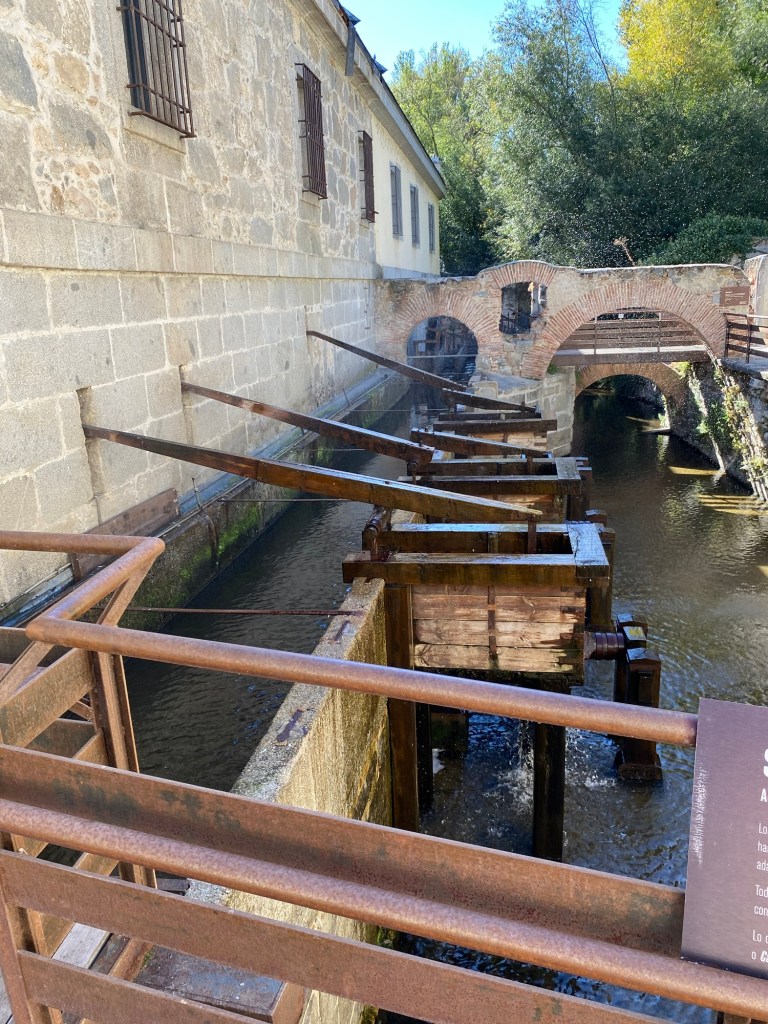
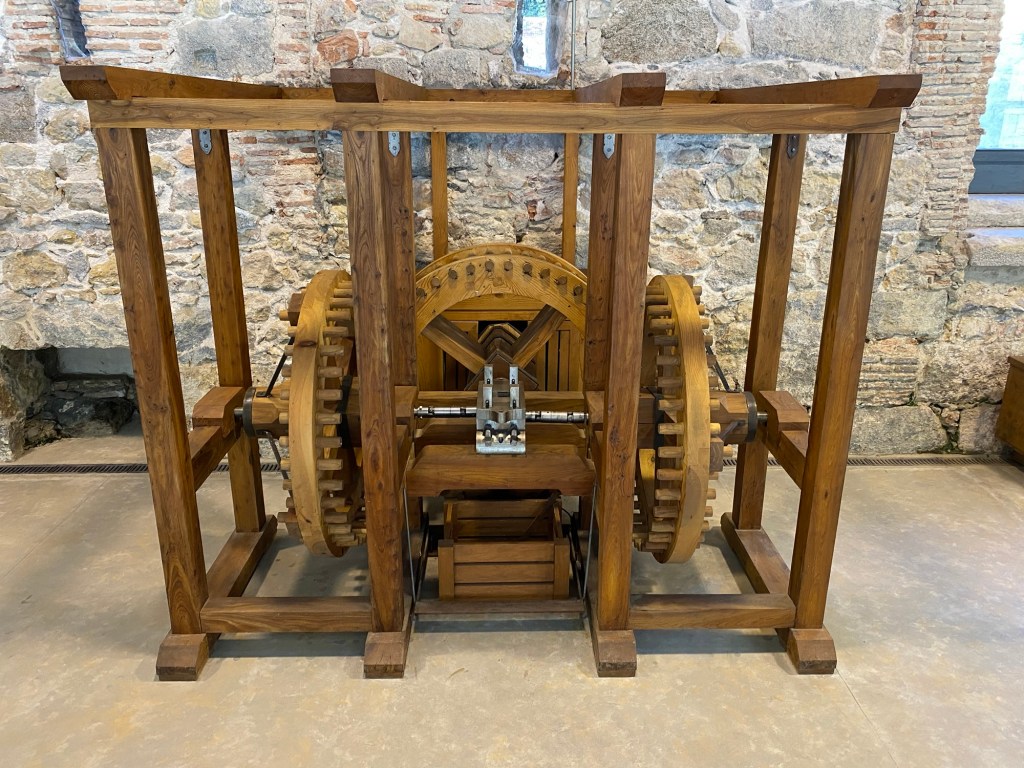
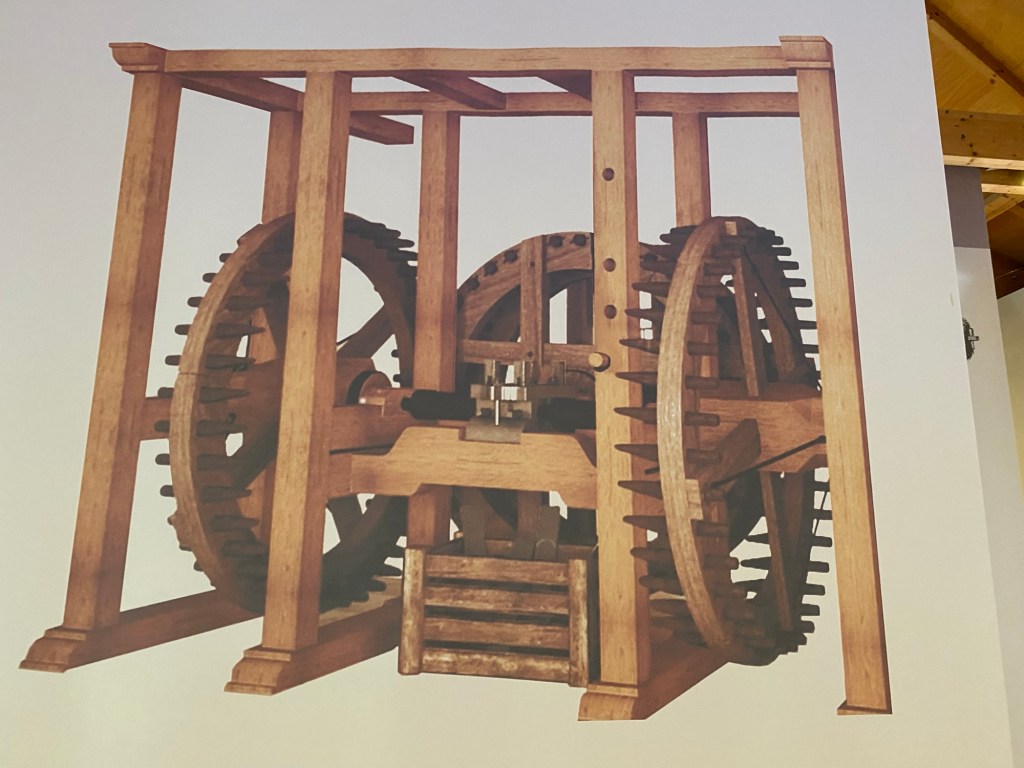
Spanish possession in the Americas, known as New Spain, became vibrant with trade not least in Spanish silk from Valencia.
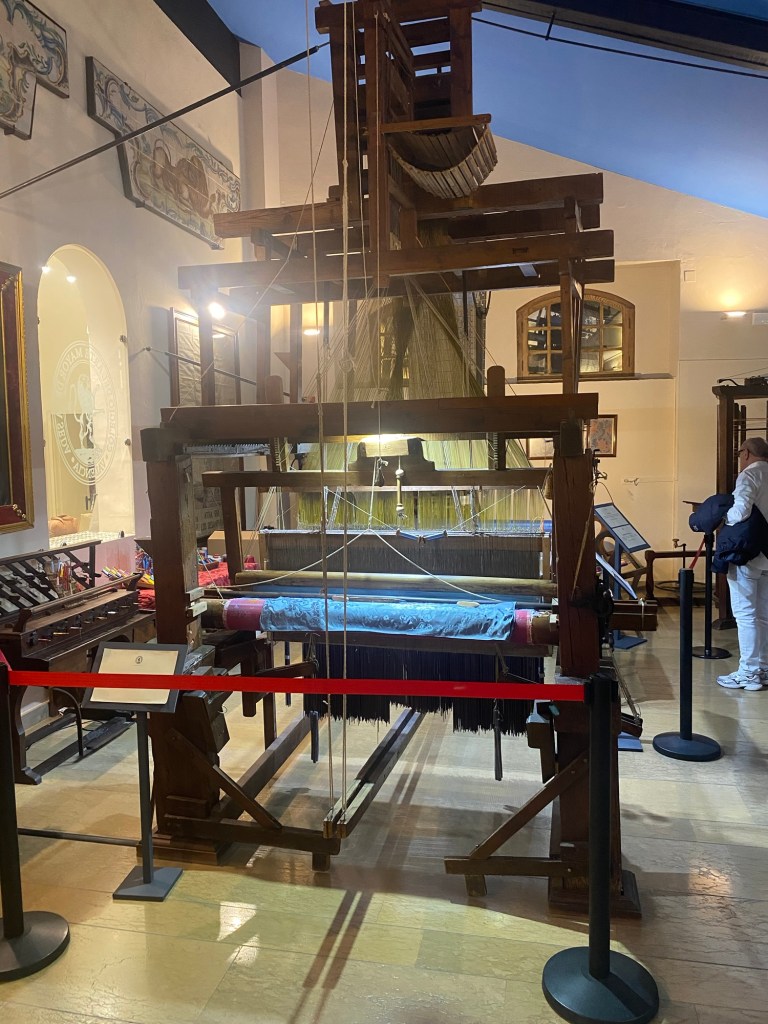
Portugal was not to be outdone, as Vasco de Gamma sailed round the Cape of Good Hope to the east opening a vital route for Eastern delights and western coinage plundered from South America.
Magellan went further, circumnavigating the world which was now ready for an explosion in trade routes
The new purchasing power found its way east as the European wealthy sought luxuries. High on the list were spices especially pepper, but also silk and cotton. China benefited but so too did India under the Mughal empire which expanded from Samarkand and Kabul into India to Delhi and Lahore and further south. India’s new wealth took shape in textile manufacturing and cotton. It showed itself in magnificent architecture such as the Taj Mahal, but also in boy’s toys, fine horses from the Steppes.
The flow of silver from Spanish South America began to make its way to China via Manila in the Philippines, thus reducing overland trade through thr Ottoman Empire. Silver was highly prized in China and bought vast quantities of Silks and Porcelain. Eventually China became oversupplied with silver and its value fell resulting in damaging inflation.
The sixteenth century in Europe saw the schism between the Protestants and the Spanish C
atholics. The stand taken by Henry VIII didn’t help, for Catherine of Aragon was the aunt of Charles V of Spain. The answer was the Royal Navy of which I wrote in How Manufacturing Shaped Britain and a piece on the Medway ports. Matthew Baker was reputedly the greatest shipwright of the Tudor period.
Spain became overstretched by its military ambitions, many financed by borrowing. This loosened its grip on the Low Countries which developed their own seafaring prowess and ventured east to what is now Indonesia. The commercial centre of gravity shifted to Amsterdam from Madrid and Lisbon. All this prompted the development of Dutch ceramics: Delft. It also underpinned the great Flemish art of the seventeenth and eighteenth centuries.
For England, it was the defeat of the Armada and the foundation of the Merchant Companies of which I also wrote in How Manufacturing Shaped Britain and in a post about adventures .
Moving into the seventeenth century, the Dutch had the upper hand and were handling three times as much trade as Britain. Britain had certain advantages. As an island, it was less expensive to defend borders and proportionately more of the population could be economically active. Britain had the Royal Navy and under Samuel Pepys revolutionised naval warfare. Ships were bigger and more heavily armed. Sailors were better trained in seamanship and naval combat Britain was on course to rule the waves.
British and Dutch prosperity benefitted the Muslim world with strong demand for goods from the east. A sea-change came with the East India Company and the Dutch East India Company which went head to head in search of rich pickings in India, China and the Far East. I wrote a blog about the British in India and also one on trade with South East Asia. In short, the British edged ahead of the Dutch and many involved with the EIC became enormously rich, not least by raiding the riches of Bengal leaving the population desperate.
Perhaps it was here that seeds were sewn for future conflicts. I am thinking of the novel Singapore Grip.
Frankopan writes how the EIC nearly went bankrupt and had to be bailed out by the British government who paid for it by raising tax in the American colonies. The result: the Boston Tea Party and American Independence.
In Europe and near Asia other matters were afoot. Russia secured good relations with the former nomadic tribes on the Steppes and from there secured fertile agricultural land. Also and importantly they attacked the Ottoman Empire. Britain was faced with a choice: Persia or Russia? Napoleon’s defeat in 1812 made the decision for them and Russia became a British ally. Napoleon had previously been planning his attack on British India. Now Russia had to decide whether friendship East or West made most sense.
In a sense they embarked on a third strand and worked again at making friends on the Steppes. Persia was clearly an issue and through a combination of pressure and friendship Russia brought the Shah on side.
Britain’s terror was the risk of losing India. This prompted unsuccessful campaigns in Afghanistan. Russia had to be stopped and it was Britain working with the French who eventually defeated them in the Crimea. The subsequent peace treaty was a Versailles moment with Russia humiliated.
Russia responded with social reforms at home, including the abolition of serfdom, and renewed efforts to kindle friendships with neighbours. Russia’s territory was immense stretching from Vadivostok on the Pacific over Siberia to neighbour European Poland. Karl Marx looked on.
The discovery of oil and the development of the internal combustion engine would transform the world every bit as much as coal had done. Britain was a growing consumer, but had no oil reserves. The Royal Navy in the years before 1914 could see that huge advantage of moving to ships powered by oil. It was easy to store and use ,and ships could be refuelled at sea, keeping them on a war footing for longer.
The Royal Dutch Shell company had found reserves in the far east. Burmah Oil had reserves in the country that bore its name. It had long been thought that Persia had oil underneath the sand. Persia was the place with which every power wanted to be friends. Russia courted them. The British showered the Shah with honours. Persia played it cool.
Towards the end of the nineteenth century a substantial gold field had been discovered in America, the chief beneficiary of which was Knox D’Arcy. He brought his money to London and bought prestigious properties. He still had money to invest and was approached by an intermediary who both believed that there was oil to be had in Persia and had the ear of the Shah. As to finding the oil, others had tried and failed. Russia was keen to secure rights for themselves. With patience and a willingness to spend money on exploration, Knox secured rights from the Shah. Eventually, Knox’s money ran out and he needed investors in Anglo-Persian Petroleum. Burmah Oil came and went. As war came ever nearer the Admiralty were persuaded that an investment in Anglo-Persian would be secure its supplies. The First Lord of the Admiralty, Winston Churchill, was convinced and he in turn convinced Parliament. Anglo-Persian became 51% owned by the British government which sent troops to secure the pipeline and refinery.
When Turkey entered the war, oil grew further in importance. Basra in Mesopotamia was declared British. The Gallipoli campaign followed. The post war settlement in the Middle East had oil at its heart.
In 1923 British secured, from the defeated Turks, Palestine as the route for oil to the Mediterranean. This was also essential in securing the Suez Canal. Of more lasting significance, the Balfour declaration promised a home for the Jews in Palestine. It is suggested that in order to draw America into the First World War, American Zionists had needed convincing.
With Anglo-Persian, Britain was already in de-facto control in Persia. Next came Mesopotamia with Mosul, Basra and Baghdad which were drawn together in a new country, Iraq, with the British in de-facto control. More oil was discovered and Standard Oil of American entered the fray. Britain was struggling with debts left over from the war and was finding it ever harder to defend its overseas possessions.
The revolution in Russia filtered down to the Russian possessions on the Steppes with the message that the time was ripe for free determination and freedom from the west. A Soviet Islamic world was a dream.
The reality was a little different. The revolution in Russia caused chaos, industry and agriculture collapsed. Stalin undertook extraordinary purges on the leaders in almost every area of life costing thousands of lives to add to the millions dying of starvation.
In Germany, under Hitler, industry was booming with armament manufacture. This though was at the cost of agricultural production. Germany had also made inroads into the Muslim world finding an identity of interest in hatred of the Jews. To this the Germans added infrastructure projects benefiting the countries over which Britain and Russia had squabbled.
1938 saw Germany acutely anxious about resources: food, but also coal and oil. Following Stalin’s purges, Russia was not in a position to take a stand against Germany and so did the next best thing: signing a treaty providing for the plunder of Poland. This took place while Britain and France looked on powerless to act. Britain was as ever anxious about India and the risk of a Russian advance through Afghanistan. Plans to take action were scuppered by Germany’s blitzkrieg.
1941 saw Germany now desperate about food and they eyed Ukraine, Southern Russia and the Caucuses. Russia was viewed as a country in two halves, this and the north which merely consumed and hence was of no interest. The wheat fields of Ukraine were meant to feed Germany and nothing would stop a Germany invasion. Germany’s long term plan was for their own silk road to the east.
In May 1941, Germany invaded Ukraine advancing at astonishing speed. The plan was to invade after the fields had been seeded but before harvest which was intended to feed the advancing troops with the surplus sent back to feed hungry Germany together with millions taken as slave labour. A pincer movement would see advances along north Africa into Egypt and across the Suez Canal to secure oil in the Caucuses and Baku. El Alemein put pay to that.
The reality was that the invading army had to scrape for what food they could find, leaving the population to starve. They captured some three million Russian troops but with nothing for food, they too were left to starve. The German advance came at a high price with hundreds of thousands of casualties. Supplies became a nightmare; even water was in short supply. The winter put pay to the invasion as troops were frozen to death. As the tables turned, the British and Americans used ancient trade routes to get munitions and food to Russia. I wrote of tanks to Russia in my book, War on Wheels. Stalin was jubilant.
In Germany, the hoped for food didn’t materialise and a choice had to be made as to who should be fed. It wouldn’t be the Jews. Frankopan argues that the Holocaust was partly the result of the failure of the Ukrainian wheat fields. Germany’s failure in Russia signalled the beginning of the end.
Was Stalin merely prepared to lose millions of his population or was it more calculated that there would be fewer mouths to feed? In the event he kept his wheat fields and his oil. Germany, Britain and France were exhausted and America had prospered from the supply of arms and food to the Allies.
In the years following the peace, the Soviet Union secured control over its vast territory and an iron curtain descended separating it from the west. What would happen to the Middle East? Oil was both the question and the answer. Discoveries of vast reserves in countries bordering Iran brought the oil majors from the Gulf of Mexico to the Persian Gulf and they proceeded to negotiate with sovereign states. In a matter of a couple of years tables had turned and those sovereign states became utterly clear that the oil and its revenues belonged to them. The terms of concessions softened in favour of the states and the US government offered support largely to keep the Soviets at bay.
The British witnessed their historical role slipping away in Palestine, dramatically in India and seriously at risk in Iran where power had been exercised through Anglo-Iranian in a way that mirrored the East India Company of old. This had become untenable and in spite of negotiations to soften control, the Iranian government nationalised Anglo-Iranian in 1951. Slowly the British working with the Americans regained a little ground, but the writing was on the wall. British influence was at an end replaced to a degree by American influence but ultimately by home-grown Islam who would call the shots for decades to come.
Anglo-Iranian had lost their concession in Iran and the US government encouraged their oil majors to take them up. They then redoubled efforts to support the modernisation of the country largely to keep the Soviets at bay. The threat by the USSR grew and America supported a band of countries spanning the area between Pakistan and Iran.
A fly in the ointment was Nasser in Egypt who was championing Arab independence. The threat to the Suez Canal brought about the disaster of the failed attack by the British and French. This marked the end of the old imperial powers and the real beginning of America’s fraught interference in Arab politics. Add the foundation of OPEC and Israel’s defeat of Nasser in 1967, the world of the Silk Road had fundamentally changed.
The Americans and the USSR competed with each other for the affections of the oil producing states. Soviet investment poured into Afghanistan, India and Pakistan. The Yom Kippur war of 1973 radically altered the balance of power in favour of the independent oil states. Acting within OPEC they reduced production and massively raised the price of oil. In the USA, the speed limit was reduced to 50mph, home heating was reduced by six degrees, attention was given to nuclear power, alternative sources of oil were explored in the gulf of Mexico and the North Sea. Power stations were converted to burn coal.
Money poured into the Arab world and ruling families became fabulously rich. The wealth was used to buy weapons and nuclear power on a massive scale. Local populations remained poor. In 1979, the Shah of Iran was deposed by Ayatollah Khomeini and a further shock in oil prices and production followed. Power had shifted away from America.
The years following the oil shocks of the seventies witnessed astonishing changes and behaviour along the Silk Road. The withdrawal of the USA from Iran seemed to create space for the USSR. In the event Communism proved incompatible with Iran’s Shi’a Islam. So did American capitalism and the USA lost its listening posts designed to track Soviet military movements. Interestingly western China welcomed new US posts. As to Iran, the acceptance of the Shah into the States for medical treatment proved too much for Iranian students who stormed the US embassy and took sixty hostages. It was to be the downfall of president Carter that both negotiation and military action failed to secure their release.
Enter Sadam Hussein the neurotic leader of Iraq whose perceived weakness in Iran and launched an invasion. The USA backed Iraq and left Iran without spares for the weapons they had happily supplied. Not to be deterred, Iran found spares left behind by the USA in Vietnam. Iran and Iraq were locked in a long and damaging war.
The now aging Polit bureau still cherished ambitions in the Middle East and nurtured its relationship with Afghanistan. Impatience took over and the Soviet launched a full scale invasion. It was to prove their nemesis. Rebels came together under the loose title of the Mujahadin and caused chaos amongst Russian troops who responded with uncontrolled brutality. The Mujahadin, themselves no angels, welcomed support from the USA and China where the western Islamic province of Uyghurs became fertile ground for insurgents.
Problems increased in Washington as it became known just how Sadam maintained power over his disparate country: chemical weapons. The time had come to end the war and American broke its own embargo by supplying spares first through Israel and then directly to Iran.
The position of Israel through this period was ambiguous. The Arab world had vowed its elimination yet is was prepared to act at different times as a conduit for weapons to both Iraq and Iran.
Other names emerge. The Palestine Liberation Organisation (PLO). Colonel Gaddafi in Libya, Osama bin Laden, Taliban, al-Qaida, Hezbollah. Assad in Syria. King Hussein in Jordan was the good guy, although more extreme Israelis considered Jordan to be theirs.
Sadam was apoplectic at the duplicity of the USA and invaded Kuwait. George Bush’s attack on Iraqi troops expelling them from Kuwait was met by near universal acclaim. It was quick, focused and avoided mission spread.
At around the same time the Berlin Wall fell and the USSR was broken up. Both events were seen in Washington as leaving one major player: the USA.
Trouble was building elsewhere. The USA had been accused of shooting down an Iranian civil aeroplane and then accused Iran of being behind the Lockerbie attack. The USA became increasingly suspicious of the Taliban in Afghanistan who were allowing bin Laden to live in safety, unless he undertook terrorist activity. Notwithstanding this, a number of attacks on US embassies were attributed to al-Qaida. The US retaliated by missile attacks on what they believed were al-Qaida strongholds.
11 September 2001 brought matters to a head when hi-jacked aircraft were flown into the twin towers. Once again the international response was of horror, and this included Iran. Washington embarked on a bombing campaign against al-Qaida in Afghanistan which the Taliban viewed as an attack on a sovereign nation.
Iraq was known to have chemical weapons and was believed to have nuclear capability – weapons of mass destruction. Their leadership was also considered to be behind terrorist activity. On this basis the USA backed by Tony Blair attacked Iraq with the aim of regime change. American and British soldiers were committed to land wars in both Iraq and Afghanistan. In both cases casualties were appalling and positive results non-existent. The USA had committed itself to control of the Silk Road.
It is clear that other countries had different ideas. Those countries to the south of Russia which were formerly part of the USSR have phenomenal reserves of natural gas, oil, coal and rare metals. The oil and gas is taken across central Asia by pipeline. China in effect financed one major pipeline by buying forward thirty years’ supply of natural gas. The area known as the Steppes has proved truly fertile in the production of cereals. The wealth is visible in the great buildings designed for the local elites.
The Silk Road as a trade route has taken form as a latter day rail road which on trains half a mile long bring container loads of goods from China to Western markets and vice-versa., the latter with luxury goods earmarked for China: silk to China rather than coals to Newcastle.
Major USA computer hardware companies have moved production to western China to benefit from lower labour costs and access to the rail head. China is also constructing a digital super highway and building Confucius Institutes along the road to teach Chinese culture.
Frankopan suggests that the new Silk Road is picking up the road of two millennia earlier. He had referred to the area to the east of the Mediterranean as the centre of the earth, or the centre of gravity; he suggests much more so than groupings in south east Asia or south America.
He adds an epilogue spanning the decade from first publication in 2015 to the revised edition in 2025. It is really about alignments and rivalries.
Not surprisingly he starts with China which has invested massively in countries along the Silk Road, adopting that name. The road becomes maritime extending to South America and passes south, deep into Africa. The objective is to secure markets for China’s massive manufacturing sector. Just one statistic says a lot. China built more ships in 2024 than the USA has since the end of the Second World War. More railways are being built connecting east to west.
India stands out largely because of its antipathy to Muslims and offers rival investments. It has become Russia’s biggest trading partner especially with oil. It too has built highways from north to south to facilitate trade. Turkey is interesting having declared an ambition to expand even beyond the borders of the former Ottoman Empire. The countries of the former USSR are using their mineral wealth to invest in partnership projects. The Arab oil states are also investing heavily
The EU has made overtures to China, but Germany’s exports to Russia via the southern states perhaps add a note of cynicism. The British Manufacturing World is not mentioned even once.
The USA under Trump receives a wholly negative response. For America a worrying alignment is BRICS (Brazil, Russia, India, China and South Africa).
What of the future? The history of the Silk Road says pretty clearly that it works best with cooperation rather than confrontation. There is perhaps a certain quantity of pride to be swallowed.
Further reading:
Peter Frankopan, The Silk Road – A New History of the World (London: Bloomsbury, 2015, 2025)

