
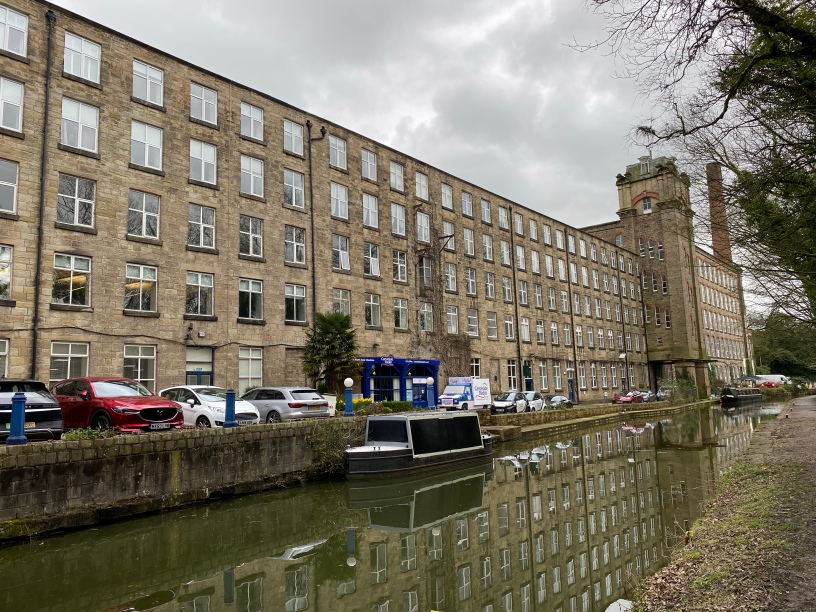
Industrial capacity had increased, in many cases dramatically. As we have already seen, shipyards had many more births, the new motor industry had built new factories, as had the aircraft manufacturers. Men had been de-mobbed and many returned to their old jobs, and the women, who had been doing those jobs so well, had to return to their kitchens.
Looking at the economy, the immediate post-war years witnessed a release of pent-up demand. The shipyards completed ships, the motor companies returned their attention to the domestic market, the aircraft manufacturers looked at what a peacetime market for air travel could be like. The electricity industry witnessed a strong demand for its products. Siemens posted good profits in 1920, demand for cable was strong and they saw growing demand for telephones, certainly in the near future. Even the textile industry, which had languished with wartime restrictions on international trade, saw promise in the post war world; Lancashire witnessed a ‘craze of speculation in cotton’, as mills changed hands.
In 1921, the euphoria died down, demand slumped and companies were laying off workers by the thousand. Cotton exports in 1922 were half of those in 1913, consumption of raw cotton decreased in line. Coal exports were only a third of pre-war levels. By June 1921, two million people were unemployed. The problem was the ‘old staples’ of textiles, coal, iron and steel and shipbuilding.
Cotton had maintained a steady level of production during the war, but the 1920s saw a collapse of export markets – India fell by 90% between 1918 and 1939 – and a growth in competition from lower cost countries, Japan in particular. The Lancashire cotton business had also remained fragmented, with merchants, spinners, weavers and finishers. What was needed was rationalisation, but the owners were reluctant to act themselves; successive governments didn’t want to intervene for fear that subsidies would be demanded. At the initiative of the Bank of England, the Lancashire Cotton Corporation (LCC) was formed in 1929 to try to merge some of the many hundreds of spinning companies operating millions of spindles. It was very much an uphill task and the industry continued to decline. LCC was eventually taken over by Courtaulds in 1962.
I write about the dismantling of the ‘war machine’ the controlled establishments, the aircraft manufacturers and companies like Vickers and Armstrongs.
Britain’s pre-eminence in shipping had been hit during the war by its need to focus on Naval production and replacing ships in the British merchant fleet. This focus meant that the worldwide demand for merchant shipping had now to be met by yards in what we might see as emerging nations: the USA, but also Norway, Sweden, the Netherlands and Japan. Whilst a huge tonnage of merchant shipping had been lost in the war years, much had been replaced by these overseas yards. These merchant fleets of other flags now carried an increasing share of world trade, reducing the proportion carried by ships of the British fleet. If foreign buyers approached British yards, those yards, carrying a weighty overhead in excess capacity, would be unable to compete on price and so would fail to win orders. British yards thus saw reduced merchant demand. The post war treaties on naval power meant that the Royal Navy itself was restricted in the number of ships it could order, and, of course, it would give first option to the its own Royal Naval Yards. The net effect was that British yards had both far greater capacity than they needed and very little in the way of orders to fill it.
I write about the changes to the steel industry in my next book Vehicles to Vaccines since it sets the scene for what happened after 1951.
You can read more in How British Shaped the Manufacturing World
 British Manufacturing History