
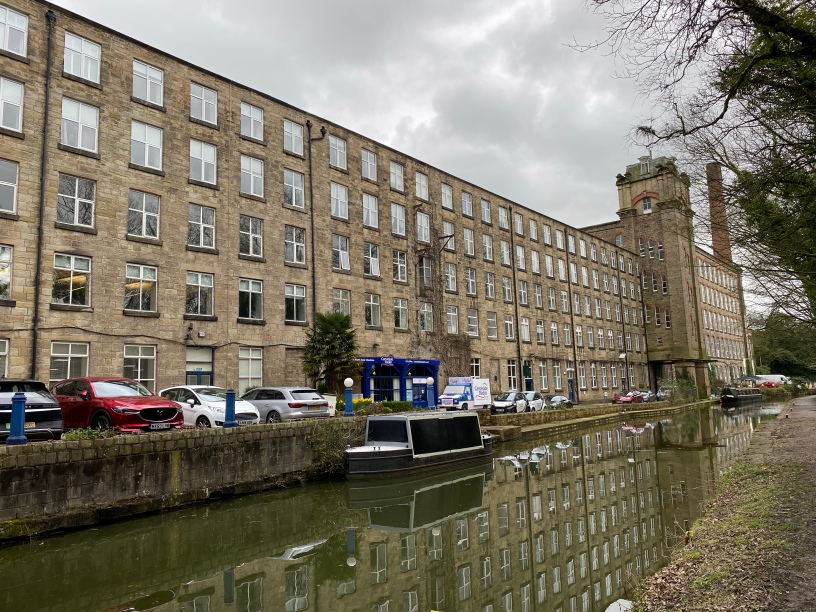
From communication through internal combustion to electricity
The fruits of manufacturing progress found their way into linking the nation and empire through better communication, into the home but also, more ominously into armaments. From there, I argue, it was the humble sewing machine that led to the next big stride. A machine was needed to make cloth into clothing, but this proved to be astonishingly difficult. Eventually American Isaac Singer managed it and set up on the Clyde to supply the British market. More significantly men like Hillman saw how the technology could be adapted to mobility and so the bicycle which led to the internal combustion engine and so the motor car and aeroplane. Throughout this progression the use of electricity was being exploited and this added the vital link.

Internal combustion
Oil had been discovered in coal mines as a source of combustible fluid and hence power. It could be burnt to heat water and so make steam. It could also be made to combust in an enclosed cylinder, driving a piston. The bicycle had sewn the seed, and, particularly, the French began to explore adding power, from internal combustion, to bicycles. Once the famous Red Flag had ceased to control speed on British roads, engineers and entrepreneurs began to build an industry that would dwarf textiles, iron and steel and coal. Why stay on the ground? Thinking, that had been around since the time of the Great Exhibition, could be given its wings, and man flew. Ships were powered by diesel. View more
.

Electricity
Telegraph expanded under the sea until the farther reaches of Empire were linked. Telephone followed a little later. The invention of the dynamo enabled far greater use of electricity. Cities began to be lit by electricity. Electric motors began to appear in factories and to power vehicles on and off rails. Telegraph needed wire; radio was wireless. The first steps of using wireless, particularly with ships, were taken before the first shots were fired from the trenches. View more
Communications
The growth, that steam enabled, demanded an administrative infrastructure: clerks who could keep records, newspaper men who could disseminate news. People, receiving ever better education, were hungry for ideas and entertainment. Printing and paper making were key. London was the epicentre, and was becoming revolutionised by railway connections. Electricity too dates from decades before the Great Exhibition and first found use in the telegraph, initially using cables laid alongside railway lines, linking the nation. View more
The Home
The seventy years between the Great Exhibition and the start of the Great War had seen great changes in the way many people worked and travelled. Yet, the way food and homewares were produced hadn’t changed a great deal. The local butcher, baker, grocer and green grocer supplied daily needs. A carpenter might make furniture, a seamstress a dress, a cobbler boots, a tailor a suit of clothes. Change though was afoot, and I seek to tell it through the prism of my father who was born in 1891. View more
The sewing machine and bicycle
“No useful sewing machine was ever invented by one man; and all first attempts to do work by machinery, previously done by hand, had been failures. It was only after several able inventors had failed in their attempts, that someone with the mental powers to combine the efforts of others, with his own, at last produced a practical sewing machine.’
It is the story of this book: the way one idea builds on another, until finally an answer is found. The sewing machine was ultimately an American invention, vital to the textile industry but also to many homes across the land. It brings in another aspect, how more and more inventions were crossing borders, with people of different nations building on the work of others. It is also the story of how one invention leads to another: first the sewing machine, next the bicycle. View more
Armaments
Instruments of war have been manufactured for centuries: swords by cutlers, pistols and muskets by gunsmiths and cannon by iron foundries. It would be logical to suggest that these manufacturers simply grew and developed over time. To a small extent this is true, and the Arsenal at Woolwich was, for many years, clear evidence of this. The story of British armament manufacturing is more complex and grew out of the industrial revolution, but particularly the rivalry which it inspired. From the time of the Crimea, shipbuilders became gun makers. View more
 British Manufacturing History