
Mankind had been making things from metal for millennia. In Medieval England, in every large village and small town, there were blacksmiths and wheelwrights; there were also wainwrights, for carts were vital in transporting supplies. Wherever metal bearing ore was found, it would be smelted using charcoal which, it had been discovered, was more suitable than wood, having fewer impurities, burning more steadily but more importantly at a much higher temperature. Coal was there for the picking in a number of places by the sea-shore particularly in Northumberland, and was found to be a useful source of heat, although, because of impurities, not as well suited to smelting as charcoal; it was known as sea-coal (as opposed to char-coal).
Iron presented a yet bigger challenge, with repeated attempts to produce iron in suitable quantities and quality. A good number failed, until a patent was taken out on 21 February 1621, in the name of Lord Dudley, ”for melting iron ore, making bar iron, &c, with coal, in furnaces with bellows.” The patent may have been in the name of Lord Dudley, but the ideas and skills were those of his son, Dud, who had come down from Balliol College, Oxford to manage his father’s iron furnace and forges. Dud was met with huge opposition, and was unable to bring his project to fruition. Many others tried similar techniques, but they too were met with failure. Attempts were made using coke, but still with no success. The Civil War intervened and Cromwell himself became involved, but also without success. On the restoration, Charles II came to the throne and Dud re-emerged to make yet another unsuccessful attempt. All the trial and error by so many at last produced the desired result and by 1700, Leigh, writing the Natural History of Lancashire, could say that ‘iron was being made ‘by means of cakes of pit coal’ (i.e. coke).
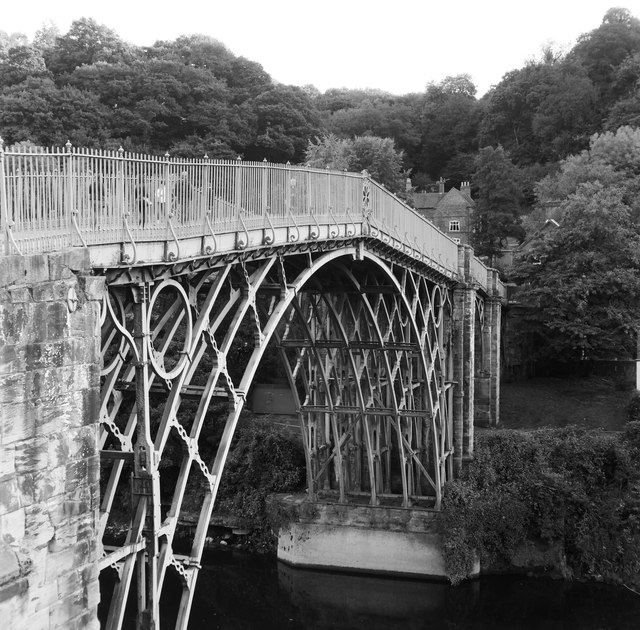
The previous paragraphs are extracted from my book I go on to suggest that the making of iron was developed further famously at Coalbrookdale and met that of tin and copper, the latter two from Cornwall. The manufacture using these metals became the business of Birmingham and I wrote of this in an essay for my BA. A little to the north Sheffield became home to the making of items from steel and the name Hunstman enters the story. Steel would become a massive industry both in the UK, Germany and America. I write of the latter two in later posts: Germany; America. I explore developments in Britain in How Britain Shaped the Manufacturing World.
 British Manufacturing History