
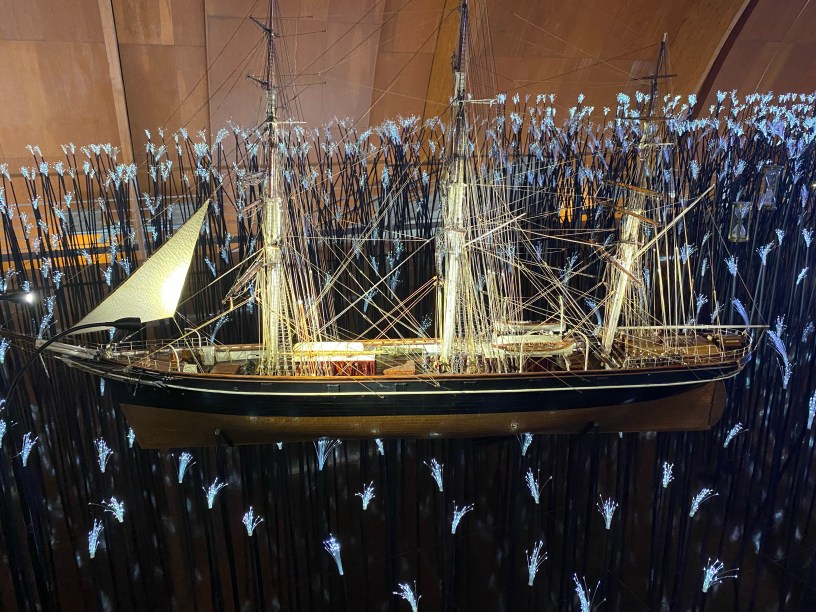
Looking back from the Great Exhibition of 1851
The Great Exhibition marked, if you like, the end of the beginning, certainly for Great Britain. As I argue, it was Britain’s pre-eminence on the seas and in trade that kick started manufacturing at scale on these islands, that and the Napoleonic wars which drove Manchester cotton traders to find ways of reducing cost. This led to the demand for machinery and more power, eventually in the form of steam produced from coal. Thus by the mid-nineteenth century these islands were top manufacturers not only of textiles but also machinery not least the steam engine.
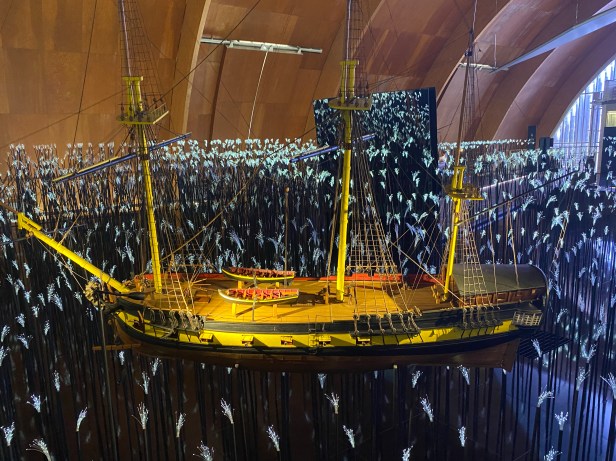
Trade, exploration and shipping
As a process the Industrial Revolution really only became visible after it had been running for some years; there was no big bang. A number of interrelated factors contributed to it. I start by recognising features of the island nation.
Seafaring was a way of life for a sizeable minority, and this involved exploration of foreign lands as well as the more obviously fishing and coastal transport. The British were an adventurous people. They were also a trading people, and foreign lands offered opportunities for buying and selling. The British had been building ships in hundreds of places around our coastline for centuries. Ships were made of wood and powered by sail. As trade increased, so did the need for size and speed. A shipping industry began to grow. It was driven all the time by the magnetism of trade as adventurers discovered countries and their exotic produce, and merchants imported raw materials and exported goods in ever growing quantities and people in ever growing numbers.

Steam and steel
No-one visiting the Great Exhibition could have been in any doubt of the fundamental importance of steam; indeed many would have travelled to the exhibition in a carriage pulled by a steam railway engine (though not by the Flying Scotsman!) Some may well have come on a Cook’s Tour. In the early nineteenth century, the production of coal and iron and indeed textiles had been held back by the power then available, that of running water and horses. Something more was needed and steam was to be the answer. Newcomen and others invented the steam engine, developed further by Watt, Stephenson and others. It transformed the world of work, in some ways making it more dangerous. But, it enabled dry and ventilated mines, it carried the coal from the face to the shaft and up to over ground railways and thence to steam ships. Railways extended from the mines across the country and beyond. Iron works grew. Steel was invented. Britain now exported coal and iron and steel as well as cotton, and more ships were built. View more
Coal and metal
Coal had ‘tentacles in every part of this changing society’. Landowners loved it, for it lay under their land; farmers benefitted from its use in burning lime for fertiliser; textile manufacturers used its heat in bleaching and dyeing; houses were built from brick and glass both made by the heat of coal; many small workshops across the land, as we shall see, used it to enhance their productivity. Metal was not only needed for large machines, but also for small machines, clocks, guns, instruments and ‘toys’ – small decorative items to delight the growing middle class. Shipbuilders began to explore the use of metal for ships. View more.
Textiles
At the Great Exhibition, the number of exhibits relating to the textile industry was not great, but the Census of 1851 had pointed to the huge number of people the industry employed. It was highly significant, but where had it come from, not least those dark satanic cotton mills? Many families set up in Lancashire as a cottage industry supplementing the living they earned from their small holdings. They mirrored their sister families in Yorkshire and elsewhere who had spun and woven wool for centuries. The Napoleonic wars changed everything. The European market disappeared for British goods, demand tumbled and prices crashed. For the small holders this was disaster; for the merchants it was a crisis from which opportunity came. They began to mechanise the cotton industry in mills with machines powered by water. What was needed was more power. View more.
 British Manufacturing History