
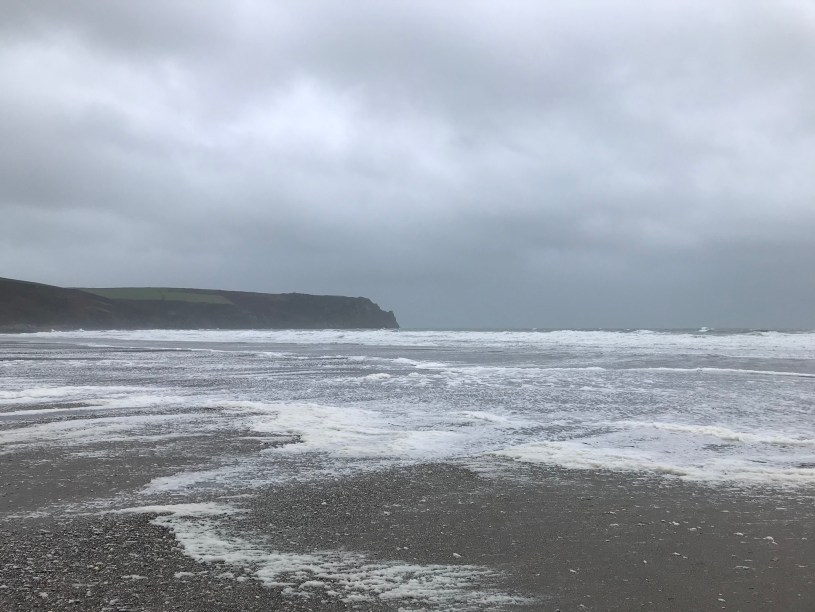
Cornwall was the source of valuable metals, until more accessible reserves were found elsewhere and so a very much part of the Industrial Revolution. The image is of South Cornwall. Continuing the metals theme, I am taking the Southwest to include the English part of the Forest of Dean as well as the counties south and west of Bristol.
Cheltenham and Gloucester
The Romans installed garrisons at strategic towns across England and Gloucester was one. In medieval times and probably earlier, iron ore was found and was smelted with charcoal from the nearby Forest of Dean. At nearby Temple Guiting the Knights Templar set up one of the first fulling mills in the twelfth century. The two towns were later famous for their contribution to aircraft production. Read more by following this link.
Wotton-under-Edge
Home to Renishaw plc and McMurtry Automotive
Dursley
RA Lister made agricultural machinery and diesel engines
Bristol
Home to the early days of shipbuilding through its trading links and from these to WD & HO Wills cigarettes and Fry’s Chocolate. In the eighteenth century, Bristol was a centre of Zinc production from ore mined in the Mendips. You can read more in this link.
Bath
Harbutts plasticine was made at Bathampton. In the Second World War Bristol manufactured aircraft at a shadow factory built in a disused quarry in nearby Corsham where there was also an underground ammunition storage depot. Rotork’s Brassmill Lane factory was built in 1961 and is now the HQ of a global business serving the energy industry. I also spied a Rotork motor powering locks on the River Nene. The Bathford paper mill dating back to the eighteenth century became owned by Portals the security printer and is its last remaining mill in the UK.
Trowbridge
Former home of Bowyers sausages, later joined with C&T Harris of nearby Calne as part of Northern Foods. Not to be confused with Harris sausages of London, the sausage king. Nestle and General Foods make Shredded Wheat and Cheerios.
Melksham
Home of the Avon Rubber factory. G Plan Upholstery moved here from High Wycombe.
Malmsbury
In the twelfth century one of the first fulling mills was established at nearby Heycroft.
Chippenham
Evans O’Donnell set up a railway signal works in 1897 and six years later merged with the Kilburn firm of Saby and Farmer which moved all manufacturing to Chippenham. Westinghouse Brake and Signal bought the combined business and moved from their London factory in 1932. It was bought by Hawker Siddeley in 1979 subsequently becoming part of BTR, Invensys. It is now part of Siemens Mobility rail infrastructure
Weston Super Mare
Bristol Beaufighters were produced at a shadow factory in the Second World War at nearby Old Mixon
Bridgewater
British Cellophane manufactured here from the 1930s until 2005. I was a joint venture between Courtaulds and La Cellophane SA
Taunton
Home to cider. Read more in this link.
Axminster
Carpets have been made here for over 250 years and are still woven in Devon. Machine tool manufacturer JH Shand moved from London in 1940 and carried out crucial tooling work including for the Spitfire.
Honiton
A Drake and Gorman, Skull Ltd company made switchboards. Radio-Intercom made baby alarm systems.
Newton Abbot
Centrax, with 2,000 employees, made gas turbine blades for Bristol Olympus aero-engines and mobile transformers and generating sets. The area is also a major producer of ball clay.
Paignton
STC moved here from Ilminster where it had moved during the Second World War.
Street
Where Clarks shoes were manufactured. I write more in this link.
Chard
Home to Numatic International manufacturer of the Henry vacuum cleaner
Yeovil
Home to Westland (now Leonardo) Helicopters and BAE Systems digital intelligence. You can read more in this link.
Cheddar
Home to Showerings Babycham, once again owned by the Showerings family. Cheddar cheese is made in a number of places including Redruth and Froome. The major producer Dairy Crest is now owned by the Canadian Saputo. It was previously the processing arm of the milk marketing board.
Wellington
Home to woollens manufacturer Fox Bros.
Weymouth
The first recorded incidence of the Black Death was recorded here in June 1348. The plague spread and killed perhaps half the population. With too much work for too few people and strict control of wages the poor suffered
Exeter
Was a major centre of the wool trade. It now is home to a top university and a vibrant service economy.
Tiverton
Home to John Heathcoat textiles.
Oakhampton
In the nearby Taw Valley the farmers co-op Arla are investing in a creamery to make Mozzarella.
Launceston
In nearby Lifton, Ambrosia Creamed Rice has been made since 1917. It is now owned ny Premier Foods.
Delebole
Slate is still extracted here
Plymouth
In 1859 Isambard Kingdom Brunel extended his Great Western Railway across the Tamar bridge into Devon and Cornwall. The Royal Naval Dockyard, later known as Devonport Dock Yard, was created in Plymouth in the late seventeenth century. As well as shipbuilding the city attracted technology companies. You can read more by following the link.
Appledore near Bideford
Home to Appledore shipbuilders currently owned by Harland & Wolff
St Austell
English China Clays was the major producer of china clay in Cornwall and also manufactured related building products. The Eden Project now occupies former clay mining quarries. Before china clay the St Austell area was extensively mined for metla. I write more in this link.
Camborne and Redruth
Cornwall was exporting the tin mined here as early as 1,300 BC. Copper and silver were also mined. In the eighteenth century Cornwall was mining the metals demanded by the industrial revolution. You can read more in this link. At nearby Upton Towans from 1888 the National Explosives Company manufactured dynamite and other explosives. They later joined 29 other companies in Nobel Industries Limited
Callington
Ginsters pasties and sausage rolls made here, now owned by Samworth Brothers of Melton Mowbray.
Truro
The cathedral city of Truro is home to Kensa Ground Source Heat Pumps. These pumps are already installed in a number of projects including the replacement of night storage heaters in three tower blocks in Thurrock, Essex.
Falmouth
The town was the busiest port in Cornwall importing wine and timber, exporting tin and pilchards. Along with this, the town’s businesses supplied services to shipping including the Packet Service set up on 1689 to take post to Spain and beyond when the overland route through France was disturbed once more by war. Alongside ship repair, ships were built until 1930. Now A&P operate the largest ship repair facility in Britain, and Pendennis Shipyard offers a specialist repair facility for yachts.
 British Manufacturing History