
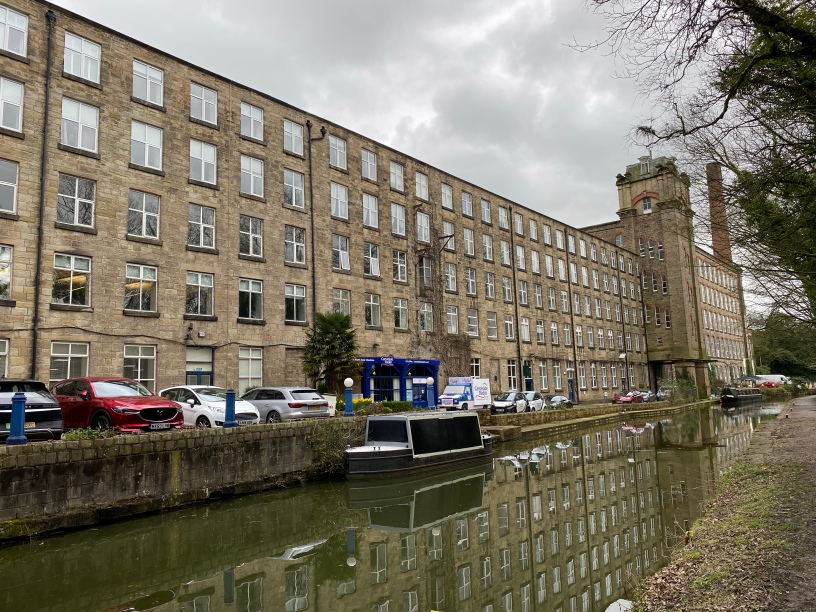
The climate of the north west leant itself to the spinning and weaving of cotton. Later chemicals, electrical engineering and glass fixed the region in the national manufacturing jigsaw. In the sixties Courtaulds bought up a great many cotton mills and so were a highly visible presence.
Manchester
Was home to the cotton traders who provided the raw cotton to the multitude of spinners and weavers in Lancashire who would then sell their finished cloth to those same merchants. The merchants later transformed the industry with the introduction of mills housing machinery for the mass production of cotton cloth. As I explain in this link, Manchester has a genius for re-invention.
Merseyside and the Cheshire salt towns
Liverpool
Was a seagoing town connecting Britain with many parts of the world. Its manufacturing was largely built round the materials it imported. With the decline of the port, Liverpool became one of the firt areas in the country to receive active support in re-inventing its manufacturing. You can read more by following this link.
Blackpool
Home to TVR motor cars. Johnson & Johnson manufacture here. Like many towns Blackpool had an extensive tram system with vehicles built in the city’s own Rigby Road Works but also by English Electric in Preston and Brush in Loughborough. Mullard produced components at Lytham St Annes and Fleetwood.
St Helens
Home to Pilkington Glass of which I write much more in Vehicles to Vaccines and in this blog. Like much of the surrounding area St Helens had salt mines and from these the early heavy chemical industry grew with the production of soda which became part of United Alkali. Production did though shrink back as new processes were embraced elsewhere (the Solvay process for producing soda at the ICI plant at Winnington – outside Northwich). Thomas Beecham moved from Wigan to set up as a chemist in the town. Beecham later became part of GSK. I write more in this blog
Newton le Willows
The famous Vulcan Foundry, which became part of English Electric with Ruston-Paxman Diesels, played a big part in building the railways and later in the modernisation of British Railways. Newton-le-Willows also became home to GEC Switchgear.
Runcorn
New Town designated in 1964 with a long history of chemical manufacture. Read more in this link.
Widnes
Close to the Cheshire saltfields, this was a natural place for alkali manufacture. Read more in this link.
Warrington
New Town designated in 1968. A chemical town based on the production of soda from salt. Crosfield, later part of Unilever, had a toiletries and detergent business. In the Second World War Fairey Aviation managed a shadow factory modifying American made aircraft. Historically Warrington had manufactured metal goods and engineering products. It also became an early producer of sheet aluminium. I tell more in this link.
Lancaster
Home of Gillow Furniture, also in London
The Cotton Towns
Preston
Preston, along with Chorley and Leyland was designated a new town as Central Lancashire in 1970. Chorley, a cotton town, had been home to a massive Royal Ordnance shell filling factory in the Second World war which was repurposed for textile production. Leyland was dominated by Leyland commercial vehicles. In Preston, Dick, Kerr & Co factories building electric locomotives and aircraft filled a massive gap left by the decline in the cotton industry. I write much more about Preston and neighbouring towns in this link.
Leyland
Leyland under the leadership of the Spurriers was a force to be reckoned with. The subsequent story of British Leyland is well known and I write about it in Vehicles and Vaccines. Leyland still assemble DAF trucks.
Blackburn
A cotton weaving town with now home furnishings. You can read more by following this link
Oldham
A cotton spinning town with machine makers, Platt Brothers. Much later Ferranti Limited moved their heavy electrical business from London in 1900 and later focused there on naval and civil computer systems and fuzes. When Hawker Siddeley was formed in 1935, Avro’s operations moved to Chadderton and Woodford in the Oldham borough. Woodford became home to British Aerospace Commercial aircraft production until that ceased in 2001. Read more in this link.
Burnley
A cotton weaving town with manufacturers of power looms. Lucas aerospace and automotive had a big presence derived in part from the Gas Turbine Equipment Company. Mullard manufactured radio components in Simonstone.
Bolton
A cotton spinning town with machine makers, Dobson and Barlow. Home to Warburtons Bakeries.
Rochdale
In the twenties Dunlop bought cotton mills to complete the material sourcing for the production of tyres. Rayon from Courtaulds’ Rochdale factory and in thread form was accepted as an alternative to natural cotton by spinners. It brought the company great prosperity and a strong position in the American market, through its subsidiary American Viscose, and in international markets, through its patent and licence agreements.
Todmorden
Weir Group had an iron foundry in the town
Accrington
Cotton and coal, bricks and textile machinery. Read more in this link.
Wigan
A coal and cotton town at the centre of canal and railway mania. Beecham originated here as a chemists shop in 1850, but then set up his first factory in St Helens. Heinz Baked Beans set up their UK production here. A major steel works was located adjacent to the Wigan flight of canal locks. In the Second World War the Royal Ordnance factory produced five and half million 25lb shells. You can read more by following this link.
Horwich
One of the six major railway workshops was established here in 1887 transferring activity from Manchester.
Skelmersdale
A new town designated in 1961. Thorn set up a plant for the manufacture of colour picture TV tubes. Union Carbide set up production, as did Dunlop.
Poynton
A coal mining town where Ferranti located its microwave division.
Macclesfield
Home to silk with reputedly two hundred mills at one time. Home also Hovis and now Astra-Zeneca. Follow this link to read more.
Congleton
Home to ribbon manufacturers, the Beresford family. Over the years there were mills in Congleton itself but also Macclesfield and Derby. Products included ribbons for lady’s wear, medal ribbons and fustian – a velvet made from cotton and laboriously cut by hand.
Wilmslow
Quarry Bank Mill at nearby Styl is open to visitors to gain a sense of what cotton production was like.
Knutsford
Ilford Ltd manufactured here
Stockport
Was where more than half of the hats made in Britain were produced in 1900. It was an industry dating back to the seventeenth century and earlier. You can read more in this link.
Southport
The Vulcan motor company manufactured chassis for the War Office in the First World War. Mullard manufactured radio components.
Northwich
Winnington Hall was home to much brilliant ICI research of which I write in Vehicles to Vaccines. The same building had been a girls boarding school at which John Ruskin had spoken about the education of women. Nearby, ICI (formerly Brunner Mond) manufactured soda ash (Carbonate of soda) using the Solvay process which had been patented in 1863. It is now the headquarters of Tata Chemicals Europe. Read more in this link
Chester
The Romans set up forts across the country and Chester was one such. Much later, the coming of the railways brought three railway workshops and a LNWR factory manufacturing railway wagons. Vickers managed a large shadow factory to meet the demand for Wellington bombers during the Second World War. The factory subsequently became part of Vickers-Armstrong. Also in the town were Hydraulic Engineering Company, the Westminster Coach and Motor Works, the aluminium manufacturer Williams & Williams and Brookhurst Switchgear Ltd. (with thanks to Stewart Shuttleworth and Stanley C. Jenkins and their book Chester at Work. Bristol Meyers Squibb have a presence in Chester and manufacture at nearby Moreton.
Barnoldswick
A cotton town which welcomed a shadow factory in the Second World War working on jet engines first for Rover and then Rolls-Royce. Silent Night, the largest bed and mattress manufacturer in the UK, which started business in 1946.
Carlisle, Cumbria
Home to Carr’s Biscuits subsequently part of United Biscuits. Separately Carr’s Flour Mills produced both flour for human consumption and animal feeds. Nestle make instant coffee at nearby Dalston.
Kendal, Cumbria
K Shoes was founded in 1842 and manufactured in the town until 2003.
Barrow-in-Furness, Cumbria
Vickers began building ships having bought land from the Duke of Devonshire. The shipyard is now part of BAE Systems and builds mainly submarines. Ferranti had a semiconductor plant here. You can read more in this blog.
Whitehaven, Cumbria
Chzech refugees Frank Schon and Fred Marzillier created the Marchon works in Whitehaven in 1940. Albright & Wilson adopted their new process of sulphuric acid production from anhydrite using reserves at Whitehaven when they bought Marcon in 1955.
Sellafield, Cumbria
A Royal Ordnance factory manufacturing TNT was set up here in the Second World War. It is now the site of a nuclear power station.
Distington, Cumbria
A shadow factory managed by High Duty Alloys (later part of Hawker Siddeley) produced Hiduminum (an alloy developed by Rolls-Royce) for aircraft parts.
Ulverston, Cumbria
Glaxo built a new factory, modelled on their Brentford HQ, to manufacture antibiotics.
Ellesmere Port and Stanlow
The German Hoechst Elsmere Port plant produced nearly all indigo dye. The same factory produced the major anti-syphilis medicine. Although not manufacturing, these areas provided vital port facilities for oil and although its subsequent refining. British Dyestuffs had an indigo plant here. Stalantis has a major factory here now manufacturing electric vans; Vauxhall manufactured vans since the 1930s.
 British Manufacturing History