
The East of England could boast a good number of engineering companies born out of the mechanisation of agriculture. In 1919, a number of these were brought together under the umbrella of the Agricultural and General Engineers Ltd with offices at Kingsway in London. An advertisement from the time lists the companies and their location:
- Aveling & Porter Ltd* – Rochester
- Barford & Perkins Ltd – Peterborough
- E.H. Bentall & Co Ltd* – Heybridge (Maldon) (Essex)
- Blackstone & Co Ltd* – Stamford
- Charles Burrell & Sons Ltd – Thetford
- Clarke’s Crank & Forge Co Ltd – Lincoln (the factory closed in 2002 after a fire)
- Davey, Paxman & Co Ltd – Colchester
- Richard Garrett & Sons Ltd* – Leiston (Suffolk) (bought by Beyer Peacock)
- James & Fredk. Howard Ltd* – Bedford
- L.R. Knapp & Co – Clanfield (Oxfordshire) (Farringdon)
- E.R. & F. Turner Ltd – Ipswich
- East Anglian Engineering Ltd (Including Bull Motors – see Ipswich) – Stowmarket
Those marked with * were in the 1919 prospectus amalgamated for coordination and development. The chairman, Mr Archibald Maconochie, added at the 1920 AGM that standardisation and mass production as well as coordination would help with competition both at home and abroad. A subsequent meeting added a little more flesh. The company was investing in new premises and plant and would refocus production: agricultural implement in Bedford, oil engines in Stamford, food preparation machines in Heybridge, steam road rollers at the Invicta works in Rochester and motor road rollers in Peterborough.
The advertisement then lists the activities of the combined group:
- steam and electric wagons
- steam tractors and tractions
- steam & motor road rollers
- petrol and crude oil engines
- gas engines and producers
- steam engines, boilers and complete power plant
- agricultural and milling machinery
- forgings and electric motors
The links are to the blogs pieces on the respective towns. The company went into liquidation in 1932 and I write about the fate of some of the individual companies again in the separate blog pieces.
By 1923 as a result of a depression in farming an an engineering lock out of 13 weeks, results had been dire and the policy of centralisation reversed in favour of flexibility.
The 1925 AGM refers to new members of the group: Brotherhood making aircraft parts and compressors, Bull Motors electric engines and Davey Paxman road making plants. In the remainder of the twenties the company reported promising developments in the associated companies and in particular good export sales.
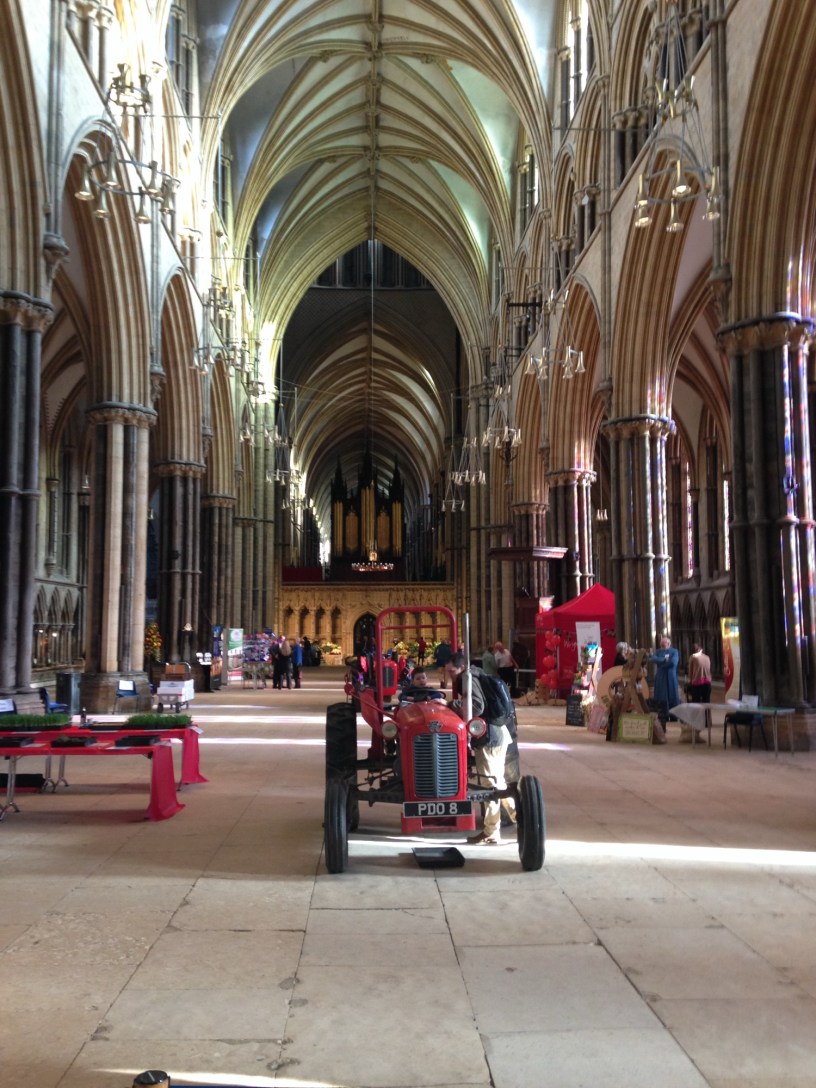
An article in the Times of December 1931 reports a request received by the director s for an investigation of the company’s affairs by Sir Gilbert Garnsey of Price Waterhouse and Lord Plender. In 1932 Receivers were appointed and profitable subsidiaries sold. I refer in my blog on Grantham to the creation of Aveling Barford. Blackstone too continued as I tell in my blog piece on Stamford. Davey Paxman entered into a relationship with Ruston & Hornsby (the image is of a celebration of food and farming in Lincoln Cathedral) and both companies were bought by English Electric in 1966. E.R. & F. Turner regained its independence adding to its fold Bull Motors. The business of James & Fredk Howard passed to Ruston & Hornsby.
 British Manufacturing History