
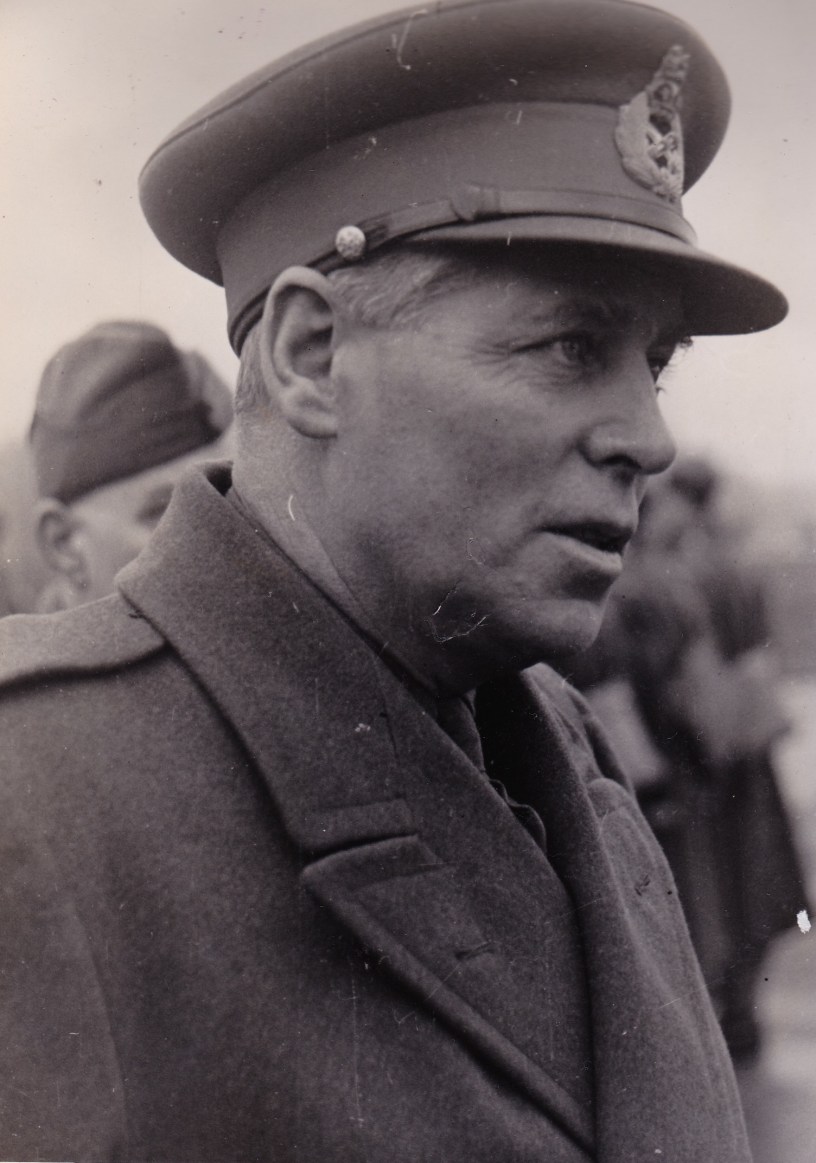
It is chilling to think that many of those men born in the 1890s would serve through two world wars (if they survived) and could also be part of the step change in British manufacturing witnessed in the twentieth century. Ronald Weeks was one such man. He was the first Director-General of Army Equipment in the Second World War and had been and would be an innovative manufacturer.
He was the son of a Durham mining engineer. The family had been farmers in County Durham for many decades. Ronald went from school in Durham down to Charterhouse in Surrey and then to Cambridge, where he was an exceptional student. He was one of the first Cambridge graduates to pursue a career in industry.
In 1914, he was commissioned in the Prince of Wales’s Volunteers and later gained a regular commission in the Rifle Brigade where he gained a reputation for leadership and initiative in battle. He was awarded an MC in January 1917, a DSO in January 1918, a Bar to the MC in July 1918 and the Croix de Guerre as well as being mentioned in despatches. He ended the war as a major in the Rifle Brigade.
He then worked at Pilkingtons becoming the first non-family director. In the 1930s, he was part of Management Research Group No.1 with Seebohm Rowntree, exploring the management issues which were presented by companies growing ever larger.
In the Second World War he rose to have responsibility for army equipment as Deputy Chief of the Imperial General Staff.
After the war he joined Vickers as chairman of English Steel where he negotiated first its nationalisation and then its denationalisation. He became executive chairman of Vickers, a massive job. He held the chair through a time of radical change when Vickers had been brave enough to invest in a new plant at Tinsley Park in Sheffield in the period between nationalisations when other steel makers held back. They also grappled with the transition from major arms manufacturer to manufacture of everything from aircraft (the Viscount) to computers (Powers Samas)
J.D. Scott, writing The History of Vickers, recognised in Weeks something quite special. He writes ‘by the end of the Second World War, Weeks’ brilliance as an administrator had become recognised as something of a phenomenon. If his career and his personality had been designed for the chairmanship of Vickers they would have differed very little from the actuality’.
Further reading:
J.D. Scott, Vickers – A History (London: Weidenfeld and Nicolson, 1962)
 British Manufacturing History