
Kingston was possibly the most important market town in Surrey. Like so many places, its history was built on the wool trade. In the fifteenth and sixteenth centuries it supplied London first with Surrey Whitewear pottery and then with Redwear. As London grew, Kingston supplied many of its needs using the Thames as the vital transport link. Turnpikes were built, but the Thames reigned supreme until the railways arrived in 1838. This first Kingston station was in Surbiton, but Kingston was becoming a centre for the growing residential areas of Surbiton, New Malden and Chessington.
Manufacturing came in earnest in the First World War, first with Thomas Sopwith manufacturing aircraft which would become iconic for the part they played in the war effort. It was all about the internal combustion engine. Racing driver, Kenelm Lee Guinness formed the KLG spark plug company to manufacture the version of the spark plug which he had invented. Bus and lorry manufacturer, Leyland, built their vehicles for the war effort.
Harry Hawker, who was Sopwith’s chief test pilot, formed his own Hawker Aircraft Company after the war and it was agreed that the companies should be joined. Tragically he died in a flying accident in 1921 the year his company merged with Sopwith. Thomas Sopwith became chairman of the combined company which continued to develop aircraft in Kingston. In 1934 Hawker Siddeley was formed which drew together Hawker, Gloster of Cheltenham, Sir William Armstrong of Elswick, Newcastle and Armstrong Siddeley of Coventry.
In the Second World War, Hawkers manufactured their equally iconic Hurricane Fighter using also factory space at Langley near Slough. Eventually some 14,533 Hurricanes were built. The Hurricane was followed by the Typhoon, of which 3,330 were built, and then the Tempest which did battle with the V2s. In all, the Hawker Siddeley Group provided some 30% of all equipment provided by the British Aircraft Industry in the Second World War. Factory space increased from two million square feet in 1938 to fifteen million in 1944.
Leyland manufactured lorries and also tanks including Churchills, Centaurs and Comets. They built bombs at a rate of 400,000 a month. John Perrings made radio sets in a secret workshop above his furniture shop using employees seconded from the Hoover factory at Perrivale to teach his staff the necessary skills. Siebe Gorman in nearby Chessington made rubber suits for navy divers.
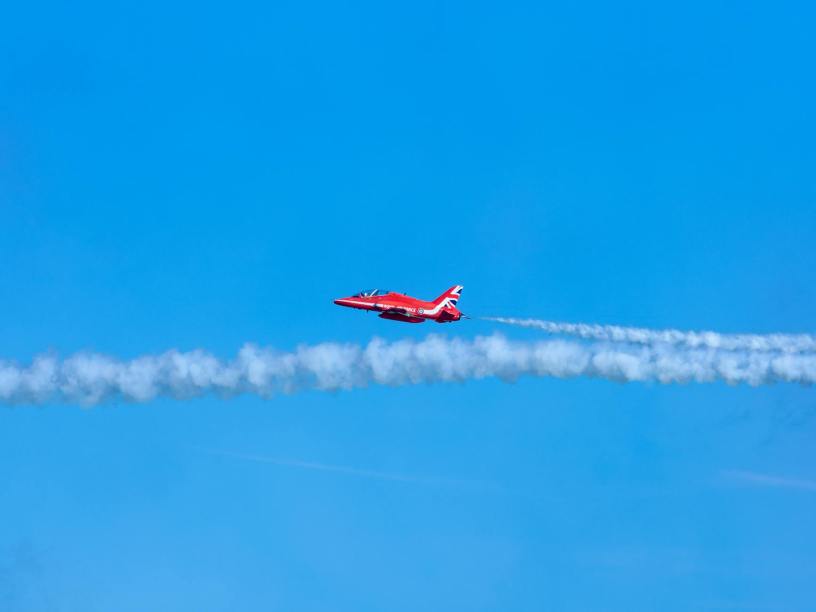
After the war Hawker Siddeley went on to produce further acclaimed aircraft not least the Harrier and it became part of the British Aircraft Corporation and then British Aerospace. The successor, BAE Systems, closed the Kingston factory in 1992. I write of the post war aircraft industry in Vehicles to Vaccines. The Hawk jet, produced by BAE Systems flown by the Red Arrows, was developed under Hawker ownership.
Decca Radar had a significant presence in Chessington and Tolworth and also in nearby Addlestone. In the Second World War, Decca bought the record making company that made Embassy records. This brought them in contact with a talented radio engineer who introduced them to WJ O’Brien who had failed to interest any American company in his radio navigation system. The result was the famous Decca Navigation system.
The company emerged from the Decca Record Company in 1947 and moved to Tolworth in 1951. Three years later premises were taken in Chessington. Heavy radar for air traffic control and air defence was based in Tolworth. In the mid fifties, government informed the company that any further expansion had to be outside the immediate Surrey area and a site was taken on the Isle of Wight. Heavy radar was sold to Plessey in 1964. The remaining Surrey operations were focused on marine radar and this was bought by Racal in 1979. The legacy of Decca radar is now within BAE Systems.
Further reading:
- Shaan Butters, The Book of Kingston (Cardiff: Baron Books, 1995)
- https://woottonbridgeiow.org.uk/decca-legacy/index.php
Local residents will know their towns far better than I possibly can. Please use the feedback to highlight any glaring errors or omissions.
 British Manufacturing History
Leave a comment