
We were more of a nation of cobblers than cordwainers; shoes only began to be bought new an any quantity in the nineteenth century with increasing urban populations. The demand for boots for soldiers undoubtedly boosted demand in the time of the Napoleonic, Crimean and World Wars. Unlike the textile industry where British inventions were key to mechanisation, in the case of shoes we looked more to America and developments from the sewing machine.
There were both cobblers and cordwainers in probably every town, however the industry grew substantially in four places. Substantial production began in London since that was where the population was growing fastest. As I tell in my blog piece on London, a strike in 1812 encouraged a move of the industry to Northampton.
Northampton and neighbouring towns of Wellingborough and Kettering and neighbouring villages embraced boot and shoe making, as did a little later nearby Leicester. On the other side of the country, shoe making emerged as a strong industry in Stafford. In each case, shoe making led to supporting engineering industries. You can read in more detail about these towns by following the links.
Norwich perhaps stands somewhat out on a limb. At the start of the eighteen century it was second only to London in size of population. It had grown prosperous on wool. It embraced shoe manufacture at the point when wool was moving elsewhere. In shoe manufacture it was said to have ranked fourth in the country, but it did then amass a range of industry from publishing to mustard which helped to maintain its prosperity.
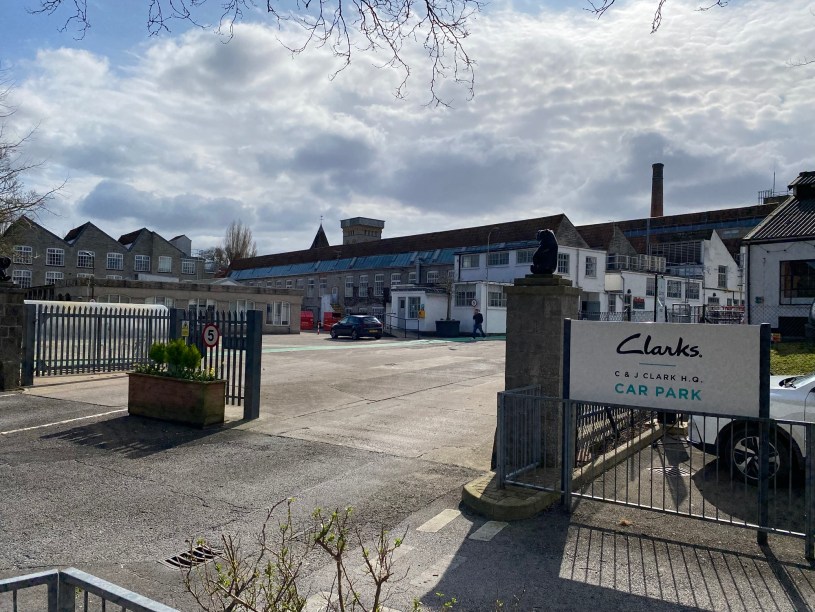
Two of the best known brands of shoes came from none of these centres. K Shoes were made in Kendal in Cumbria and Clarks in Street in Somerset. Clarks began in 1833 when Cyrus and James Clark joined in partnership in the rug-making, fell-mongering and footwear trades. My own family were fell-mongers in Wheatley to the south of Oxford preparing hides for the Oxford colleges. For Clarks it was to be footwear.
In his book C&J Clark A History of Shoe Making in Street in Somerset, 1833-1903, George Sutton tells the early story of shoe making for the growing population and draws into the picture name from other parts of the manufacturing story. Starting in the Napoleonic wars, before the period covered by his book, reference is made to Marc Brunel, of whom I wrote elsewhere in connection with making pulley blocks for the Royal Navy. For the war, Brunel made heavy boots with riveted soles using a machine developed by a Henry Maudslay. Sutton traces the development of riveting along with the sewing machine, and in particular Singer, into the larger factory system for the making of shoes. He talks of the main manufacturing areas and how Leicester and Kendal embraced mechanisation more willingly than Northampton or Stafford. Another point of interest was the use of Gutta Percha, of which I wrote in relation to electrical insulation, as material for goloshes until vulcanised rubber was invented. Macintosh material was also explored. By 1903, Clark’s were making 870,000 pairs of boots and shoes a year, large but a fraction of Northamptonshire’s production for the armed services in the First World War.
Further reading
George Sutton, C&J Clark A History of Shoe Making in Street in Somerset, 1833-1903 (York: Sessions, 1979)
 British Manufacturing History