
Leeds was a centre of wool manufacturing with most processes being outworked and the finishing and dying in the city. The skills in wool spread to flax which, whilst important, never overtook the significance of wool.
The availability of water and labour combined with the crucial availability of cheap coal made Leeds the perfect wool city. Coal was used to boil water for dying and increasingly to power machinery in spinning and weaving. However, the take-up of steam power wasn’t rapid because of uncertainty of demand particularly during the Napoleonic wars.
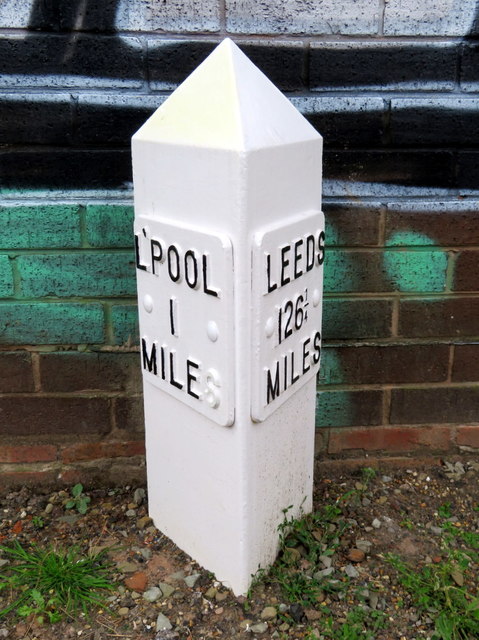
As with all manufacturing, good communications were key. The Aire and Calder canal provided the link to the east coast and the Leeds and Liverpool through to the west. Railways did of course follow. In 1811, John Blenkinsop patented a mechanism something akin to a rack and pinion to work with railway engines. He engaged the engineering firm of Fenton, Murray and Wood of Leeds, competitors of Boulton and Watt, and used steam engines with two cylinders working cranks at right angles to each other. The system was installed on the previously horse-drawn railway from Middleton Colliery to Leeds. It was a success. Blenkinsop wrote that, ‘an engine with two eight-inch cylinders weighing five tons, drew twenty-seven waggons, weighing ninety-four tons, up an ascent of two inches in the yard; when lightly loaded, it travelled at ten miles an hour, did the work of sixteen horses in twelve hours, and cost £400’.
With the growth in textiles, an associated engineering industry grew with machinery for spinning and weaving both wool and flax. In time the engineering skills were turned to other uses from railway locomotives to nails. It was said that Leeds was second only to the Black Country in metal working.
The mid nineteenth century saw the move away from Leeds of the making of worsted cloth to Bradford. Its place was taken by clothing factories taking advantage of the American invention of the sewing machine. John Barran was one such clothing manufacturer followed by Montague Burton and Joseph Hepworth. At one time Burton had 20,000 employees in its Leeds factories.
With the growing population, shoe manufacture grew with companies such as Stead & Simpson which would later move to Leicester.
The engineering sector continued to serve its textile brothers but also built hydraulic equipment, heavy presses and a large variety of manufacturing from wrought iron and steel.
Leeds businessmen had fingers in many pies. Richard Paley had interests in iron-founding, potash manufacture, cotton spinning and soap boiling. Cotton was perhaps a brave experiment and soon gave way to wool. Joshua Bower was involved in glass manufacturing, glue boiling and coal mining. Tetley, the brewer, also had interests in coal mining.
Looking at some of the companies more closely:
The late nineteenth century saw the emergence of a printing company run by John Waddington with a specialty of theatrical posters. It didn’t prosper until, using its skills in lithographic colour printing, it began making playing cards. These proved very popular not least in the marketing operations of many companies. From playing cards, it wasn’t a big leap to jigsaws and board games. An alliance with the American Parker company brought Monopoly; other games followed. The basic business was printing and so printed packaging was an obvious extension. Waddington was bought by the American Hasbro in 1994.
George Mann manufactured litho presses for lithographic printers. The company founded in 1870 was bought by Vickers in an attempt to diversify away from armaments after the Second World War and their Newcastle factories increased Mann’s productive capacity.
Joseph Watson, or Soapy Joe’s as it was known, made soap and became part of Lever Brothers when they bought Crosfield and Gossage. Unilever are still present in Leeds with their largest deodorant factory.
Smith, Beacock and Tannett were machine tool makers of such repute to have supplied the father of machine tools, Maudslay, for their marine engine business. They became part of Greenwood and Batley a substantial engineer and machine tool maker.
Charles Thackray is of particular interest to me since, as surgical instrument makers, they were in the same business as my great grandfather. They began as a chemist and for many years supplied pharmaceuticals, in the early days, of a fairly basic nature. Relationships with doctors led to the sourcing of equipment for them and in time the manufacture of that equipment at the company’s own factory in Leeds. It was very much a craft with skilled engineers working with their customers to develop the precise equipment they needed. A crucial relationship was with the leading hip replacement surgeon where both operating instruments and the artificial hips themselves were produced. In time computer aided machining was introduced to great effect. Thackray ended up having 18% of the world market for replacement hips. The problem was that increased mechanisation and fierce competition meant that a comparatively small independent company couldn’t survive and so in 1990 it was sold to a larger American competitor.
F & A Parkinson set up in 1913 and manufactured a wide range of electrical components, especially motors. In 1928 they merged with Crompton of Chelmsford to become Crompton Parkinson with F Parkinson as chairman. They were bought by Hawker Siddeley in 1968 where they combined with Brush in Loughborough. BTR bought Hawker Siddeley and the name Crompton Parkinson was bought by Brook Motors which became Brook Compton Parkinson.
In the First World War Leeds was home to a National shell filling factory and one producing cartridges.
I wrote of the Royal Ordnance Factories and their role in the Second World War in How Britain Shaped The Manufacturing World. One such was based in Leeds, later bought by Vickers plc, and I wrote in Vehicles to Vaccines how the Challenger tank was made there. In nearby Ossett, Moorcroft Mill run by Hepworths was requisitioned as an armaments and aircraft shadow factory in the Second World War.
The broad manufacturing base continued and a shining exception is Wilson Power Solutions which is a family company now into its third generation supplying transformers for renewable and other industrial projects. Siemens Energy and Siemens Rail Systems are located near Leeds. Britvic have one of their main factories here. Leeds is ranked third by size of UK manufacturing regions. Greencore plc make Yorkshire Puddings at their Leeds factory.
Further reading:
- A History of Modern Leeds, Derek Fraser ed., E.J.Connell and M. Ward, Industrial Development 1780-1914
- John Chartres and Katrina Honeyman, Leeds City Business 1893-1993 (Leeds: Leeds University Press, 1993)
- A History of Modern Leeds, Derek Fraser (ed.) (Manchester: Manchester University Press, 1980)
You can read more in my books How Britain Shaped the Manufacturing World and Vehicles to Vaccines
 British Manufacturing History