
In the fifties, factories, shipyards and textile mills were busy places striving to sell exports to balance the nations books, so much so that we had never had it so good. The Vickers Viscount graced the skies.
The sixties was a time for change, for the white heat of technology. The motor industry produced the Mini and the Jaguar E-type. The QE2 was launched. GEC joined with English Electric and Associated Electrical Industries to become a giant, only to be dramatically slimmed with closures and redundancies. Pilkington float glass transformed glass manufacture.
In the seventies oil crises caused the wheels to fall off, as rampant inflation tore through the economy. Nationalisation of ailing industries marked the mid-decade. Britain so nearly lost Rolls-Royce as the development costs of the RB211 engine ran out of control. Belatedly, the UK joined the EEC. Glaxo, Wellcome, Beecham and Boots each launched drugs that would transform their businesses. The railways began a transformation with the Intercity 125. North Sea Oil drove up the exchange rate making life doubly tough for manufactured exports. North Sea Gas found its way into most British homes for cooking and heating. Boiler manufacturers did well. Renishaw took up the cudgels of British machine tool making with its revolutionary twin axis measuring device.
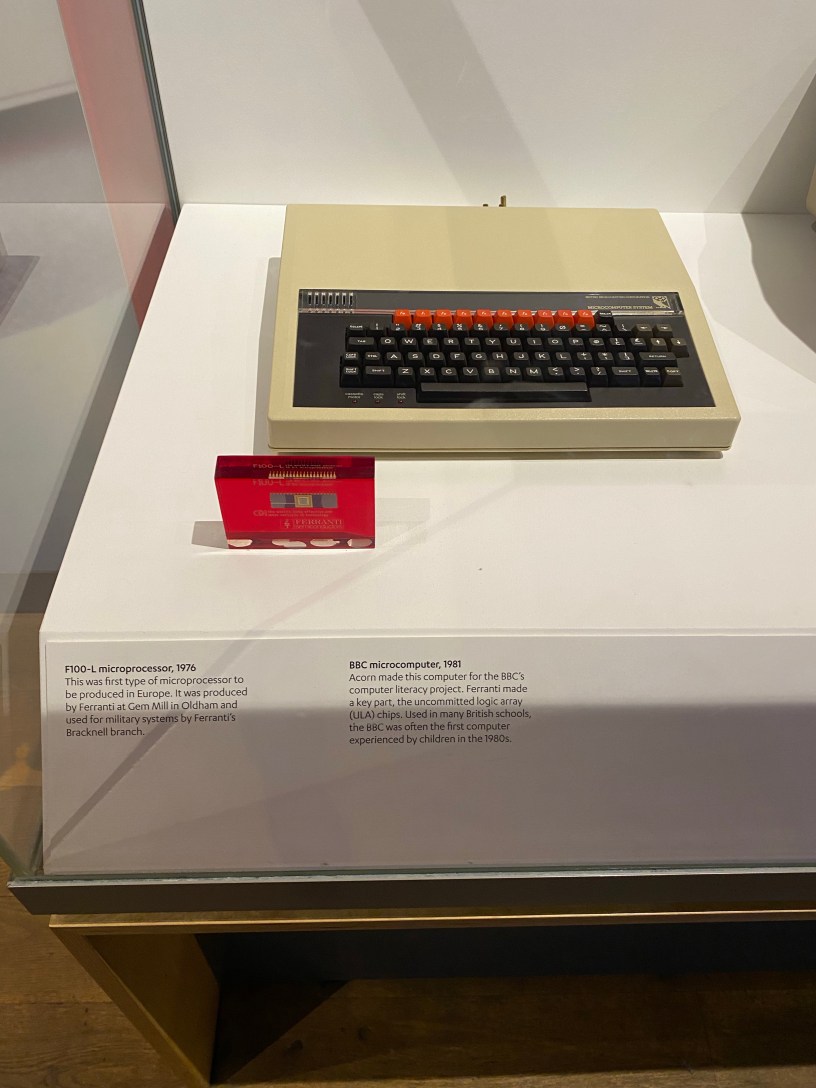
The eighties saw a ravaged economy opened to the forces of the market, and, with privatisation, much manufacturing was lost. British Rail Engineering which had built the Intercity 125 was sold to the Canadian Bombardier. In the few brighter spots, Jaguar was floated. We welcomed Japanese motor manufacturers to build factories in the UK and also investment by Japanese television manufacturers; home grown television manufacture began to wilt. The rump of the last British volume motor manufacturer, Austin Rover, was bought by British Aerospace; six years later they sold on to BMW who kept Mini – the remainder wilted on the vine. Acorn built the BBC Computer.
The nineties saw the dotcom bubble bursting with both winners (ARM) and losers (GEC Marconi) in the UK. Government turned its attention to financial services as the nation’s saviour. Rolls-Royce, Bentley, Jaguar and Land Rover were sold to foreign owners. Pharmaceutical companies combined to achieve economies of scale and a place on the world scene. Rolls-Royce plc launched its best ever engine, the Trent, the origin of which can be traced back to the RB211. BAE Systems was formed by the merger of British Aerospace and Marconi Electronic Systems from the break up of GEC Marconi. Babcock International marked out its future by taking over naval dockyards at Rosyth and Devonport.
The twenty-first century has witnessed the financial crash of 2008 which starved businesses of finance. Brexit followed, forcing a massive change in business models with the loss of a huge ‘home’ market. Covid shut everything down and left the UK with a depleted workforce from long term illness. The war in Ukraine set energy prices rocketing and inflation returned.
JCB, which had manufactured machinery for building and civil engineering as well as farming, produced the first hydrogen powered digger. Renishaw produced machinery for additive manufacturing (3D printing in metals). Astra-Zeneca, which can trace its origin back to ICI, produce, with Oxford University, an effective Covid vaccine.
 British Manufacturing History