
The railway had linked a previously disconnected country. It would make further advances over the coming years, but, in terms of communication, it would be joined by two vital lieutenants: widely available printing and the telegraph. Sir Henry Cole had, with Sir Roland Hill, introduced the postage stamp, making communication by letter much simpler.
More and more people were able to read and so hungered for any printed material they could lay their hands on.
The mechanisation of the production of paper, which came to a large degree as a result of the efforts of one man, John Dickinson.2 Dickinson embraced the science of paper making and perfected a cartridge paper suitable for use with artillery. The idea of a commercial paper making machine had been conceived in 1803 by Henry and Sealy Fourdrinier, using a continuous wire mesh on which the pulp was poured. Aileen Fyfe suggests that these two had given insufficient attention to securing their patents which meant that others could take and then develop their ideas.The John Dickinson history suggests that these early machines also had drawbacks only overcome by later techniques, such as those patented by Dickinson himself in 1811. Essentially, the Dickinson process involved a wire mesh cylinder immersed in liquid pulp. A reliable supply of clean water was vital and Dickinson found his at Aspley Mill near Hemel Hempstead in Hertfordshire. Another ingredient for certain papers was china clay. In the mid-eighteenth century huge deposits were discovered near St Austell in Cornwall and an industry began extracting the precious clay for paper making and but also, and more so, for the making of porcelain by companies such as Wedgwood. The invention of steam driven printing presses by Koenig in 1810, using a cylindrical platen to roll paper over the flat type-set, enabled faster printing particularly suitable for newspapers.
In London, much further thought was being given to transport, with a proposal for a grand central station between Kings Cross and Holborn. In parallel, a scheme for an underground Metropolitan Railway was conceived connecting Paddington to Farringdon along the line of what was still called the New Road, which, half a century earlier, had linked the village of Paddington with the City. The latter scheme had won support, but had fallen with the intervention of the Crimean War. The scheme was resurrected and building began in 1859 despite concerns at the smoke a steam engine would produce in an enclosed space; a concern partly overcome by attempts at smokeless fuel. This line triggered an upsurge in railway activity, with Victoria Station opening in 1860, Charing Cross in 1864, Blackfriars in 1865 and Cannon Street in 1866. St Pancras, the then largest enclosed space in the world opened in 1868, designed by George Gilbert Scott to overshadow the neighbouring King’s Cross.
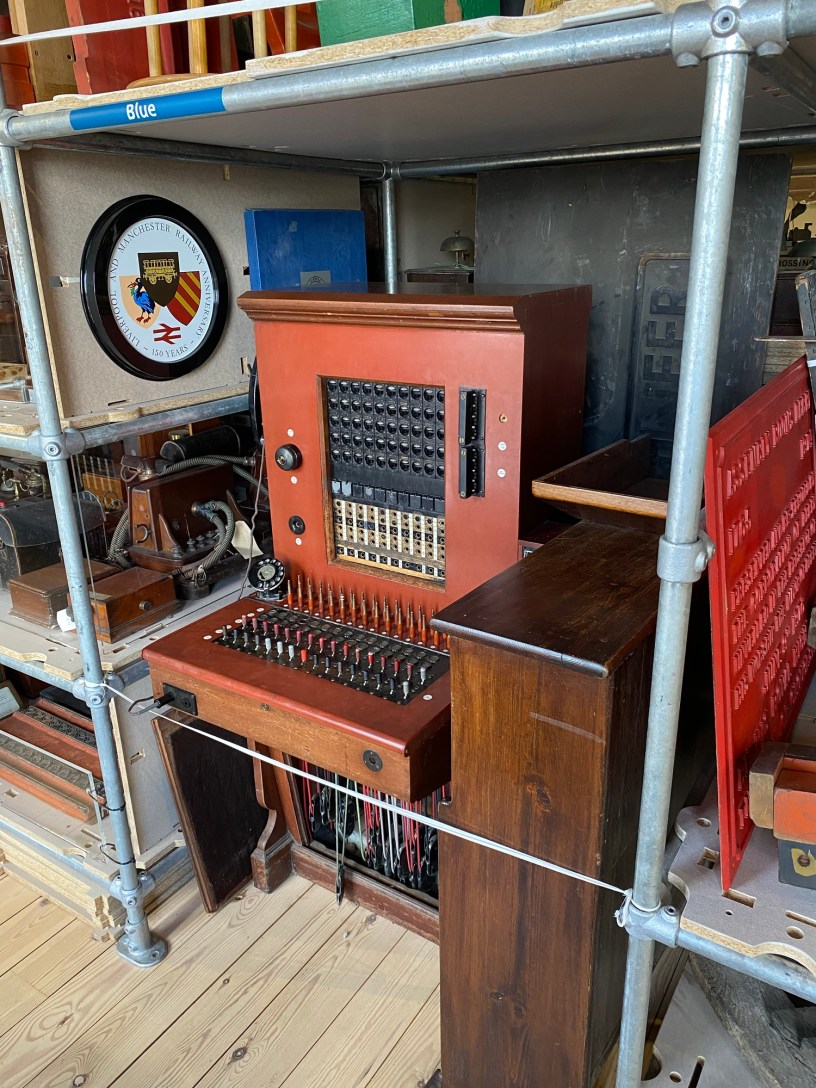
Almost hand in hand with the development of the railways had come another vital means of communication, the telegraph. ‘On 25 July 1837, William Fothergill Cooke, an English inventor, and Charles Wheatstone, an English scientist, made the first electric telegraph communication between the station rooms at Camden Town – where Cooke was stationed, together with Robert Stephenson, the engineer – and London Euston, where Wheatstone was situated. The directors of the London and Birmingham Railway were their audience, and their goal was to improve safety on the railways.’8 Two years later a second telegraph cable was run by the Great Western Railway from Paddington to Slough and this was made available for public use in 1843. Samuel Morse sent the first telegram in the USA in 1844. The telegraph had come about through the explorations being made into electricity from the discoveries of Benjamin Franklin through to the invention of the battery by Volta in 1800. The discovery of electromagnetic induction by Michael Faraday in 1831 enabled the generation of electricity by magneto-electric machines.9
These paragraphs are extracts from How Britain Shaped the Manufacturing World where you can read much more.
 British Manufacturing History